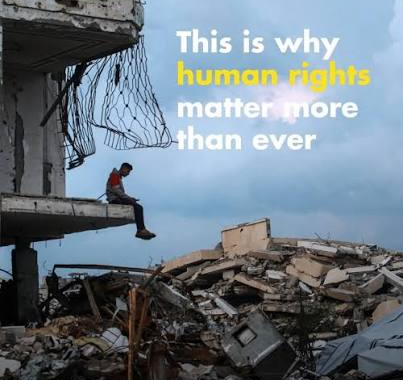
Sometimes, when we talk about climate change, we think only about melting ice, rising seas, or wildfires. But behind these headlines, there are real people—families, children, elders—whose lives are deeply affected. Imagine waking up one morning to find your home flooded, your crops ruined, or your air unsafe to breathe. For millions, this is not just a story; it is their reality. Climate change is reshaping the world, but it’s also creating a new kind of crisis: a global human rights crisis.
Our planet’s climate is changing faster than ever. This brings not just environmental problems, but also challenges to basic human rights—like the right to life, health, food, shelter, and safe water. It affects the poor and vulnerable the most, pushing families into poverty, forcing them to leave their homes, and threatening their hopes for a future. When we talk about equality, justice, and freedom, climate change becomes a deeply emotional issue. The fight for climate justice is now a fight for human dignity.
As someone who has lived in Australia since 1991, I’ve seen firsthand how bushfires, droughts, and floods can tear apart communities, leave scars on the land, and test our compassion. Through this article, I want to bring you closer to the real struggles, the hope, and the powerful examples of humanity in the face of climate change.
Let’s explore together how climate change is becoming a global human rights crisis—and why this matters to all of us.
The Human Face Of Climate Change
Climate change is not just about science or politics. It is about people. Every statistic hides a story—a mother searching for clean water, a child missing school because of floods, a farmer watching crops die from drought. These stories remind us why climate change is a human rights issue, not just an environmental one.
Think of a young boy in Mozambique, whose school was swept away in a cyclone. He no longer has a classroom, books, or a safe place to learn. Or picture a grandmother in California, who suffers from asthma made worse by smoke from wildfires.
These are not just numbers in a report; they are real lives.
In Bangladesh, for example, rising seas have swallowed entire villages. Families are forced to move, leaving behind their homes and traditions. For some, relocation means losing the land that provided food and income for generations. In Australia, the 2019 bushfires destroyed thousands of homes and took dozens of lives.
People lost everything—memories, security, hope. Insurance payouts, where available, often do not cover all the losses, and rebuilding can take years.
In Africa, droughts have made food scarce, pushing children into hunger and malnutrition. It’s not only about fewer meals; it’s also about children growing up stunted, less able to learn or work in the future. Climate change is forcing families to make impossible choices—like which child gets to eat, or whether to spend their last savings on seeds or medicine.
These are not distant problems. They show us how climate change threatens basic rights:
- Right to shelter: Homes destroyed by floods, storms, or wildfires.
- Right to food: Crops failing due to droughts or unpredictable weather.
- Right to health: Air pollution, heatwaves, and water-borne diseases rising.
- Right to water: Rivers drying up or contaminated by storms.
The pain is not spread equally. The poorest and most vulnerable suffer first and hardest. For them, climate change is not just an inconvenience—it is a daily battle for survival.
One detail many miss: recovery can take years, not months. For example, after Hurricane Maria in Puerto Rico, some families waited over a year for basic electricity and clean water. When you lose your home, job, and sense of safety at once, the journey back is long and uncertain.
What Makes Climate Change A Human Rights Issue?
The link between climate change and human rights is becoming clearer every year. At its heart, human rights mean everyone deserves dignity, safety, and freedom. Climate change threatens these basics by:
- Making homes unlivable (due to floods, fires, storms)
- Making food and water unsafe or unavailable
- Creating health risks from pollution, heat, or disease
- Forcing migration and displacement
But there’s more beneath the surface. For example, when a family loses a farm to drought, children often drop out of school to help at home or search for water. That means climate change quietly steals the right to education, too.
Rights At Risk: A Closer Look
Let’s break down the main human rights threatened by climate change:
- Right to Life and Safety: Extreme weather can kill or injure people. Floods and fires destroy communities. Heatwaves and storms are becoming more frequent and severe. In 2021, deadly floods in Germany and Belgium showed that even wealthy countries are at risk.
- Right to Health: Air pollution, heat, and new diseases can make people sick. Those with weak health—like children, elders, or people with disabilities—are at higher risk. In some cities, heatwaves now last weeks and make outdoor work dangerous.
- Right to Food and Water: Droughts, floods, and storms ruin crops and contaminate water. Farmers struggle to feed their families and communities. In Madagascar, years of drought have led to the world’s first climate-driven famine, with thousands at risk of starvation.
- Right to Shelter: Houses destroyed or damaged by climate disasters leave people homeless. Many cannot afford to rebuild. Insurance is often unavailable or too expensive in high-risk areas.
- Right to Education: Children miss school when disasters strike. Sometimes, schools are destroyed or closed for safety. After major storms, classes may not restart for months.
- Right to Work: Jobs disappear when farms fail, fisheries collapse, or businesses are ruined by storms. This can start a cycle of poverty that is hard to escape.
How International Law Sees The Crisis
Human rights are protected by international laws, like the Universal Declaration of Human Rights. But these laws were written before climate change became such a big threat. Now, many experts argue that climate change is violating these rights. The United Nations and other groups are calling for stronger action to protect people from climate impacts.
Courts in some countries are now considering whether governments have a legal duty to prevent climate harm. In the Netherlands, the Supreme Court ruled that the government must cut emissions to protect citizens’ human rights. This is a growing trend—a sign that human rights and climate change are no longer separate issues.
Real-life Struggles: Stories From Around The World
It’s easy to talk about rights in theory. But real change happens when we see the faces behind the facts. Here are some powerful stories from people living at the front lines of climate change.
Bangladesh: Losing Home To The Sea
In the coastal regions of Bangladesh, rising sea levels are swallowing land. Families who lived there for generations are forced to move. Many end up in crowded cities, struggling to find work and shelter. A woman named Fatima shared, “We lost our home to the water. My children cry for the fields they played in. We are strangers now, even in our own country.”
What many people miss is that moving to a city does not mean safety. Fatima’s family now lives in a slum, exposed to pollution and disease. The loss is not just physical—it’s also emotional and cultural.
Australia: Bushfire Trauma
During the 2019-2020 bushfires, thousands of Australians lost their homes. The fires killed 33 people and destroyed over 3,000 houses. John, a father from New South Wales, said, “I watched the flames take everything we built. My children still have nightmares. We are trying to rebuild, but the fear stays.”
Recovery is not just about rebuilding homes. It also means healing from trauma. Many families struggle with anxiety each summer as fire season returns.
Africa: Hunger And Hope
Droughts in East Africa have forced millions into hunger. Crops fail, cattle die, and families are pushed to the edge. Amina, a farmer in Kenya, said, “Every year the rains come later. Sometimes they don’t come at all. My children eat less; I worry every day. But we help each other. We share what little we have.”
Amina’s story shows the strength of community. Families share food, water, and labor. But with every failed harvest, their safety net gets smaller.
Pacific Islands: Fighting For Existence
Small island nations like Tuvalu and Kiribati face disappearing land. Rising seas threaten to erase their homes entirely. President Anote Tong of Kiribati once said, “We are fighting for our right to exist. Climate change is not just about numbers—it is about our lives, our culture, our future.”
For these communities, adaptation sometimes means planning to relocate the whole population. This is a loss of national identity that is difficult to imagine.
Indigenous Communities: Losing Traditions
Indigenous peoples, who rely on nature for food and culture, suffer deeply from climate change. In Canada, melting ice affects hunting and fishing. In Australia, sacred land is threatened by fires and floods. Mary, an elder from the Yolngu people, explained, “Our stories are tied to this land. If the land changes, our identity changes.”
One insight many miss: Indigenous knowledge can help adapt to climate change. But when communities are displaced, this knowledge is lost.
These stories show that climate change is not just about science. It is about human dignity, identity, and hope.
Why The Poor Suffer Most
Climate change is often called “the great equalizer,” but this is misleading. It does not affect everyone equally. The rich can rebuild, move, or adapt. The poor, however, have fewer choices.
Key Reasons
- Limited Resources: Poor families cannot afford safe housing, clean water, or health care. They are often forced to live in risky areas—like riverbanks or hillsides—where disasters hit hardest.
- Location: Many live in risky areas—coastal zones, flood plains, or drought-prone regions. These places are often cheaper, so the poor have little choice.
- Dependence on Nature: Poor communities rely on farming or fishing, which are most affected by climate change. If a fisherman’s catch drops or a farmer’s crops fail, there is no backup plan.
- Lack of Voice: They have less power to demand help or influence decisions. Governments and aid agencies may overlook or ignore their needs.
Another detail: after disasters, the poor are more likely to lose land titles or documents. Without proof of ownership, rebuilding becomes even harder.
Data Snapshot
Here is a comparison of how climate disasters impact rich and poor countries:
| Factor | Rich Countries | Poor Countries |
|---|---|---|
| Disaster Recovery Time | Months | Years or never |
| Access to Aid | High | Low |
| Mortality Rate | Lower | Higher |
| Migration Risk | Low | High |
| Job Loss | Temporary | Permanent |
Emotional Impact
For poor families, climate change can mean losing everything. It is not just about property or money—it is about losing memories, communities, and hope. Children grow up in fear, parents struggle to provide, and many feel forgotten by the world.
One thing often overlooked: poverty makes it harder to prepare for the next disaster. Without savings, families cannot afford repairs, insurance, or supplies. Each event pushes them further behind.
Climate Change And Forced Migration
When homes become unlivable, people are forced to move. This is called climate migration. It is becoming one of the biggest human rights challenges of our time.
Numbers Speak
- In 2022, more than 20 million people were displaced by climate disasters.
- By 2050, experts predict up to 200 million climate migrants worldwide.
But these numbers only count those who move because of sudden disasters. Many more are forced to move slowly—one family at a time—as land becomes less productive or water disappears.
Struggles Of Climate Migrants
Climate migrants often face:
- Loss of identity: Leaving home means losing culture and roots. Children grow up away from the land and traditions of their parents.
- Legal limbo: Many are not recognized as refugees, so they lack rights and protection. This means no help with housing, work, or education.
- Discrimination: Migrants may be blamed for problems or face hostility in new places. They might be seen as outsiders, even within their own country.
- Poverty: Many arrive with nothing, struggle to find work, and live in poor conditions.
Another hidden problem: migrants are often separated from family members, increasing emotional stress and trauma.
Real Example: Syrian Drought
Before the Syrian war, a severe drought pushed millions from farms to cities. The lack of water and food increased tensions and contributed to conflict. This shows how climate change can fuel not just migration, but also violence and instability.
The lesson here is that climate change can have indirect effects. It does not just cause migration, but also social unrest and even war.
What Can Be Done?
Countries need to recognize climate migrants and protect their rights. This includes providing safe shelter, access to health care, and chances to rebuild their lives. Ignoring them only makes the crisis worse.
Some countries are starting to offer special visas or support programs for climate migrants. But there is still a long way to go. Communities must also be prepared to welcome newcomers and help them integrate.
The Right To Health Under Threat
Health is a basic human right. Climate change is making it harder to protect this right, especially for the vulnerable.
Health Risks From Climate Change
- Air Pollution: Burning fossil fuels creates smog, leading to asthma, lung disease, and early deaths. Cities like Delhi and Beijing often face “airpocalypse” days when it’s unsafe to go outside.
- Heatwaves: High temperatures cause heat stroke, dehydration, and increase heart problems. In Europe, the 2003 heatwave killed over 70,000 people.
- Vector Diseases: Warmer climates help spread diseases like malaria and dengue. Mosquitoes now survive in places they never could before.
- Food and Water Safety: Floods and droughts make food and water unsafe, causing diarrhea or malnutrition.
Hidden danger: after floods, standing water can lead to outbreaks of cholera or other diseases. Health systems can be overwhelmed by the sudden increase in cases.
Who Suffers Most?
Children, elders, pregnant women, and people with disabilities face higher risks. Poor communities often lack access to doctors, medicine, or clean water.
Many health clinics in rural areas are themselves at risk from climate disasters. If a health center is flooded or damaged, the whole community loses access to care.
Data Table: Health Impacts
| Health Issue | Climate Factor | At-Risk Group |
|---|---|---|
| Asthma | Air pollution | Children |
| Heat Stroke | Heatwaves | Elders |
| Malaria | Warmer temperatures | Rural poor |
| Malnutrition | Droughts | Children |
| Diarrhea | Floods | All ages |
Emotional Story: India’s Heatwave
In 2022, India faced a record heatwave. Hospitals were full of patients suffering from heat stroke. Many poor families had no air conditioning or safe drinking water. Priya, a nurse, said, “We saw children collapse from heat. We did our best, but sometimes it was not enough. The pain of losing a life because of heat is unbearable.”
One insight: heatwaves also disrupt electricity and water supplies, making it even harder to stay safe. In many cities, power cuts meant fans and fridges stopped working.
Food Security And Climate Change
The right to food is central to human dignity. Climate change threatens this right by making farming harder and food scarcer.
How Climate Change Affects Food
- Droughts: Crops fail when rains don’t come. This means less food for families and higher prices in markets.
- Floods: Fields are ruined by too much water. Sometimes, entire harvests are lost overnight.
- Changing Seasons: Farmers struggle to predict planting and harvest times. Unusual weather confuses traditional calendars.
- Pests and Diseases: Warmer weather helps pests spread, destroying crops. Locust swarms, for example, have devastated East African farms.
What many miss: food insecurity is not just about hunger. It also leads to malnutrition, stunted growth in children, and weak immune systems.
Numbers To Know
- By 2030, climate change may push 100 million people into hunger.
- In Africa, food production could drop by up to 50% in some regions.
These numbers mean more children will go to bed hungry, and more parents will face impossible choices.
Example: Latin American Farmers
In Peru, farmers who used to grow potatoes now find the soil too dry. They try new crops, but yields are low. Families eat less, children grow weaker, and hope fades. Carlos, a farmer, said, “I work from sunrise to sunset, but the land gives less each year. My heart aches for my children.”
Another insight: as food becomes scarce, conflicts can start over land, water, or grazing rights. This creates new risks for families already struggling.
What Can Help?
- Support for local farmers: Training, seeds, and credit can help.
- Investment in drought-resistant crops: Science can offer solutions, but these need to reach the poor.
- Early warning systems for weather changes: Technology can help farmers prepare.
- Fair access to markets: Small farmers need fair prices and buyers.
But without action on climate change, these solutions may only offer temporary relief.
Water: The Lifeblood At Risk
Water is life. Without clean water, health and hope fade. Climate change is making water scarce and unsafe in many places.
Main Water Challenges
- Droughts: Rivers dry up, wells go empty. This leads to migration and conflict.
- Floods: Water becomes contaminated. Diseases like cholera can spread rapidly.
- Glacier Melt: Many regions depend on glacier water, which is disappearing. Cities like Lima, Peru, may soon face water shortages.
- Overuse: As water gets scarce, conflicts increase. Farmers, cities, and industries all compete for less water.
One detail often missed: women and girls are usually responsible for collecting water. When sources dry up, they must walk farther, sometimes in unsafe conditions.
Data Table: Water Crisis
| Region | Climate Impact | People at Risk |
|---|---|---|
| South Asia | Floods, droughts | 500 million |
| Sub-Saharan Africa | Droughts | 300 million |
| Australia | Wildfires, droughts | Millions |
| Latin America | Glacier melt | 100 million |
Real Story: South Africa’s Water Crisis
In 2018, Cape Town almost ran out of water. “Day Zero” was the name given to the day taps would run dry. People waited in long lines for water, every drop counted. Lebo, a mother, said, “I worried for my children. Would we have enough to drink? To wash? Life became a struggle over water.”
Another insight: when water is scarce, sanitation suffers. This increases the risk of disease, especially for children.
Climate Change And Inequality
Climate change does not create equality—it widens the gap. Those with more resources can adapt, while the poor fall further behind. This is a human rights crisis because it makes existing inequalities worse.
Types Of Inequality
- Economic: Poor families lose jobs and income faster. They may sell assets or go into debt to survive.
- Social: Marginalized groups—like Indigenous people or minorities—face more risks. They are often excluded from decision-making.
- Gender: Women often bear the burden of caring for families, collecting water, or finding food.
A less-known effect: climate disasters can force girls to marry early, as families seek financial security or reduce mouths to feed.
Example: Women And Climate Change
Women in rural areas often walk miles for water or food. When climate disasters strike, their workload increases. Many girls miss school to help their families. Sita, from Nepal, said, “I want my daughter to study, but she spends hours fetching water. Climate change steals her childhood.”
In some places, women’s groups are leading adaptation efforts, but they still face barriers to funding and support.
Hope Through Justice
Organizations are now fighting for climate justice—meaning fair solutions that protect the most vulnerable. This includes:
- Legal action against big polluters
- Support for communities to adapt
- Equal access to aid and technology
Another insight: climate justice is about listening to those most affected and learning from their solutions. Too often, their voices are missing from global talks.
The Role Of Governments And International Organizations
Governments play a big role in protecting human rights from climate change. But their actions often fall short, leaving many people behind.
What Should Governments Do?
- Invest in disaster prevention and recovery: Strong infrastructure saves lives.
- Protect vulnerable groups (poor, children, elders): Targeted aid is essential.
- Recognize climate migrants and give them rights: Laws must change to meet new realities.
- Support green jobs and fair transitions: Workers need help to move to new, safer industries.
Governments also need to collect better data on who is most at risk and why. This helps target support and track progress.
International Efforts
Groups like the United Nations are calling for stronger climate action. Agreements like the Paris Agreement aim to limit warming and support those affected. But promises are often slow or broken.
A less-known detail: wealthy countries pledged billions in climate finance for the poor, but much of this money is delayed or tied up in red tape.
Example: Pacific Islands Advocacy
Pacific nations have pushed for stronger international protection. They want the world to recognize climate change as a human rights issue. Their voices are powerful but sometimes ignored by big countries.
In 2022, Vanuatu led a campaign for the UN to ask the International Court of Justice about states’ responsibilities for climate harm.
Emotional Insight
When governments fail, it is not just policies that suffer—it is real lives. People lose trust, hope, and sometimes their future.
Climate Change, Poverty, And Justice
Poverty and climate change are deeply connected. Climate disasters push families into poverty, while poverty makes it harder to recover or adapt. This cycle is a major human rights challenge.
How Poverty Makes Climate Worse
- Poor families cannot afford safe housing or insurance.
- They rely on land or natural resources, which are fragile.
- They lack access to information or early warnings.
Many poor communities are left out of planning. They do not hear about evacuation orders or new support programs.
How Climate Makes Poverty Worse
- Disasters destroy homes, jobs, and savings.
- Health costs rise due to illness or injury.
- Children miss school, reducing their future chances.
Some families must sell land, livestock, or tools to survive, making it harder to recover later.
Breaking The Cycle
To fight climate change and poverty together, we need:
- Stronger social safety nets: Cash aid, food support, and emergency shelters.
- Investment in education and health: These are foundations for resilience.
- Community-led solutions: People know what works best for them.
- Fair access to resources: Land, water, and credit should be available to all.
One insight: small, local projects—like rainwater harvesting or solar lighting—can make a big difference, especially when led by communities themselves.
Example: Community Resilience
In the Philippines, after typhoons, communities organize to rebuild homes and schools. They share resources, support each other, and demand government action. This shows the power of hope and unity in the face of crisis.
Climate Change And Children’s Rights
Children are among the most vulnerable to climate change. Their rights to health, education, and safety are often threatened.
How Children Suffer
- Hunger and malnutrition from failed crops
- Illness from unsafe water or air
- Missing school due to disasters
- Trauma and stress from losing home or family
Long-term impact: malnourished children are more likely to drop out of school, earn less as adults, and remain trapped in poverty.
Real Story: Philippines Typhoon
After Typhoon Haiyan in 2013, thousands of children were left homeless. Many lost parents or siblings. Miguel, age 10, said, “I am scared when it rains. I lost my home once. I don’t want to lose it again.”
One insight: children’s voices are often missing from recovery plans. Yet, they have ideas and hopes for rebuilding.
Protecting Children
- Safe shelters and schools: These must be a priority after disasters.
- Access to health care and counseling: Emotional healing is as important as physical safety.
- Disaster preparedness education: Teaching children what to do can save lives.
- Listening to children’s voices: Include them in decisions about their future.
Hope For The Future
Children are now leading climate protests worldwide. Their courage inspires adults to act. Protecting their rights means protecting the future of humanity.

Indigenous Rights And Climate Change
Indigenous peoples are among the first to feel climate impacts. Their traditions, knowledge, and culture are tied to the land. When land changes, their identity is threatened.
Key Challenges
- Loss of land due to floods, fires, or development
- Displacement from ancestral homes
- Loss of traditional food sources
- Lack of voice in decisions
Another often-missed point: Indigenous languages and stories contain detailed knowledge about local weather, plants, and animals. Losing these cultures means losing valuable tools for adaptation.
Example: Arctic Indigenous Communities
Melting ice affects hunting and fishing, central to culture and survival. Anna, an Inuit elder, said, “We see the ice disappear. Our children cannot hunt as we did. We worry about losing who we are.”
Some communities are documenting their knowledge to help scientists understand changes and find solutions.
Protecting Indigenous Rights
- Recognize land and water rights: Secure tenure is key for adaptation.
- Include Indigenous voices in climate decisions: Their knowledge is vital.
- Support traditional knowledge and adaptation: Blend old and new solutions.
Hope Through Unity
Indigenous communities are leading climate action, sharing wisdom and demanding justice. Their voices bring hope and humanity to the climate fight.
Climate Change And Disability Rights
People with disabilities face special challenges during climate disasters. Their rights to safety, health, and dignity are often overlooked.
Main Struggles
- Inaccessible shelters or evacuation routes: Steps, long walks, or crowded spaces can be impossible.
- Lack of medical support during emergencies: Medications, wheelchairs, or caregivers may not be available.
- Discrimination in aid distribution: People with disabilities may be seen as less “deserving.”
- Isolation and trauma: Many are left alone or unable to communicate their needs.
Less obvious: many warning systems (sirens, texts) are not accessible for people with hearing or vision disabilities.
Real Example: Us Hurricane
After Hurricane Katrina, many disabled people were stranded or ignored in rescue efforts. Lisa, a wheelchair user, said, “I waited for hours for help. I felt invisible. Climate change makes me fear for my life.”
Solutions
- Inclusive disaster planning: Involve people with disabilities from the start.
- Accessible shelters and transport: Ramps, lifts, and trained staff are essential.
- Equal access to aid and information: Formats like Braille or sign language should be available.
Emotional Insight
Protecting the rights of disabled people is about respect, dignity, and compassion. Climate justice means no one is left behind.
Climate Change And Gender Equality
Women and girls are often more affected by climate disasters. Their rights to education, health, and safety are at risk.
Key Challenges
- Increased workload (collecting water, caring for family)
- Higher risk of violence during displacement
- Less access to aid and resources
- Missing school or work
One often-missed problem: women are less likely to own land or have savings, making recovery harder.
Example: Bangladesh Floods
After floods, women spend hours finding clean water. Some face violence or harassment in shelters. Rina, a mother, said, “I worry for my daughters. We need safety and respect.”
Another insight: women often organize support networks, but their leadership is rarely recognized.
What Can Help
- Gender-sensitive disaster planning: Consider women’s needs and safety.
- Equal access to aid and education: Target support to those most at risk.
- Support for women-led solutions: Fund and listen to women’s groups.
Hope Through Empowerment
Women are leading climate movements worldwide. Their strength and wisdom bring hope to communities.
The Emotional Toll: Trauma And Resilience
Climate disasters bring not only physical loss, but also deep emotional pain. Families live in fear, children face trauma, and communities struggle to heal.
Common Emotional Challenges
- Grief for lost homes, loved ones, or culture
- Anxiety about the future
- Depression and hopelessness
- Isolation after displacement
One detail: trauma can last for years, even after rebuilding. Children may develop nightmares, and adults may avoid talking about the disaster.
Building Resilience
- Community support and counseling: Talking helps heal invisible wounds.
- Rebuilding together after disasters: Shared work builds hope.
- Sharing stories and hope: Remembering the past can inspire action.
Real Story: Australia Bushfires
After the fires, many Australians gathered to share memories, comfort each other, and rebuild. Ella, a teacher, said, “We lost so much, but we found strength in each other. Hope keeps us going.”
Resilience is not just about “bouncing back. ” Sometimes, it means finding new ways to live and support each other.
Climate Justice: The Fight For Fairness
Climate justice means making sure solutions are fair and protect the most vulnerable. It is about rights, dignity, and humanity.
Main Principles
- Recognition: Seeing climate change as a human rights issue.
- Participation: Including all voices, especially the poor and marginalized.
- Fair Solutions: Sharing resources and technology equally.
- Restoration: Helping communities recover and rebuild.
A less obvious point: climate justice also means holding polluters accountable and making sure those who caused the problem help pay for solutions.
Legal Action For Climate Justice
Many groups are now using courts to demand climate action. Young people and communities are suing governments and companies for failing to protect their rights.
Example: Youth Climate Lawsuit
In 2021, young people in Germany won a case forcing the government to strengthen climate laws. Their courage shows the power of hope and justice.
Another example: in the Netherlands, the Urgenda Foundation won a lawsuit forcing the government to cut emissions to protect citizens’ rights. These cases are setting new legal standards.
Powerful Examples Of Humanity And Hope
In every crisis, there are stories of resilience, unity, and hope. Climate change brings out the best and worst in humanity. Here are some inspiring examples:
Community-led Solutions
- In Bangladesh, women’s groups organize to build flood-resistant homes. Their designs use local materials and knowledge.
- In Kenya, farmers share water and seeds to survive droughts. These informal networks are lifelines during tough times.
- In Australia, neighbors support each other after fires. People cook meals, offer beds, and help with rebuilding.
Small acts of kindness can make a huge difference—sometimes more than big government programs.
Youth Movements
Children and young people are leading climate protests worldwide. Their voices demand action and inspire change. Greta Thunberg and other activists have shown that even one voice can spark a movement.
Indigenous Wisdom
Indigenous leaders share knowledge about caring for the land. Their traditions offer solutions and hope. In Canada, fire management techniques from Indigenous communities are now being used to prevent wildfires.
Technology And Innovation
Solar panels, clean water systems, and early warning apps help communities adapt. These innovations show the power of human creativity.
For example, in India, solar-powered pumps provide water during droughts, helping farmers survive.
What We Can Do: Personal Actions For Human Rights And Climate Justice
Climate change can feel overwhelming, but every action counts. We all have a role in protecting human rights and building hope.
Practical Steps
- Raise Awareness: Share stories and facts about climate change and human rights.
- Support Local Efforts: Join or donate to community groups working for climate justice.
- Advocate for Fair Policies: Push governments to protect vulnerable people.
- Reduce Your Impact: Use less energy, save water, and choose sustainable products.
- Listen and Learn: Hear the voices of those affected, respect their struggles and wisdom.
Even small changes, like planting trees, using public transport, or eating less meat, can add up when many people join in.
Emotional Insight
When we act, we offer hope. We show compassion, build unity, and protect dignity. Climate justice is not just about laws—it is about humanity.
One final tip: talk to your friends and family. Conversations spark change, and stories move hearts.
The Role Of Digital Madama: Personal Journey And Advocacy
As Alice Nahar, known as Digital Madama, I have lived in Australia since 1991. I’ve seen communities rise from disaster, share grief, and build hope. My journey has taught me that climate change is not just an environmental issue—it is a deeply human one.
I use my voice to share stories, connect people, and inspire action. If you want to know more about my journey and how you can join the fight for climate justice, visit About the Author.
Together, we can protect rights, restore hope, and build a future where everyone is safe, respected, and free.

Frequently Asked Questions
What Are The Main Human Rights Threatened By Climate Change?
Climate change threatens rights to life, health, food, water, shelter, education, and work. It can force people from their homes, make food and water scarce, and increase health risks. Vulnerable groups suffer the most.
Why Is Climate Change Considered A Human Rights Crisis?
Because it destroys the basics people need for dignity and survival—like safe homes, clean water, and health. When disasters strike, many lose everything and struggle to rebuild. Climate change makes existing inequalities worse.
How Does Climate Change Cause Migration?
Floods, droughts, and storms make homes unlivable. People are forced to move, often without legal protection. This creates “climate migrants” who face poverty, discrimination, and loss of identity.
What Can Individuals Do To Help Fight Climate Change And Protect Human Rights?
You can raise awareness, support community efforts, push for fair policies, reduce your environmental impact, and listen to those most affected. Small actions add up and create hope.
Where Can I Find More Information Or Join Climate Justice Efforts?
You can follow climate justice groups and join conversations online. For example, visit Facebook for updates and ways to connect. Also, explore local organizations and learn from those living at the front lines.
For global resources and research, you can also check the United Nations Human Rights and Climate Change [website](https://www.ohchr.org/en/climate-change) for more in-depth information.
Final Thoughts: Humanity, Hope, And Justice
Climate change is not just about the planet—it is about people. It is a global human rights crisis that touches every corner of life, from shelter and health to dignity and hope. But in every challenge, there is an opportunity for unity, compassion, and action.
We must listen to the stories of those affected, respect their struggles, and fight for justice. The future depends on our choices today. By protecting human rights and demanding climate justice, we build a world where everyone can live with freedom, equality, and hope.
Let us stand together, act with compassion, and create a brighter tomorrow—for ourselves, and for the generations to come.