Climate change is no longer a distant threat—it is a measurable reality that is changing the way we live, work, and even think about the future. Every year, new statistics reveal just how much the planet is warming, how fast sea levels are rising, and how frequent extreme weather events are becoming. These numbers are not just abstract data points; they represent real changes happening right now, with deep impacts on humans and the environment. At Digital Madama, we explore the world of climate change statistics, environmental disasters, and the global crisis we all face together. By understanding the numbers, we can better understand our world—and what must be done to protect it.
Grasping the scale of climate change is not always easy. The science can seem complex, and the effects can feel far away, especially for people who do not see them every day. But the reality is that climate change affects everyone, everywhere.
It is not just about ice melting in the Arctic or polar bears losing their homes. It is about the food we eat, the air we breathe, our jobs, our health, and the stability of our societies. Even small changes in temperature or rainfall can have big impacts on crops, water supplies, and economies.
Another key point: climate change is not only a problem for the future. It is a crisis for now. From wildfires and floods to rising costs for insurance and food, the effects are already visible. Understanding the data helps us see the urgency—and also the hope. It shows us where action is working and where more effort is needed.
The Numbers: What Statistics Tell Us About Climate Change
The reality of climate change is clear in the data. Over the past century, scientists have tracked key indicators that show how the planet is changing. Three statistics stand out as especially important: global temperature rise, carbon dioxide emissions from fossil fuels, and sea-level changes. Let’s look at what these numbers mean—and why they matter.
Global Temperature Rise
Since the late 19th century, the average surface temperature of the Earth has increased by about 1.1°C (2°F), according to NASA and the Intergovernmental Panel on Climate Change (IPCC). This rise may seem small, but it has huge effects on weather patterns, agriculture, and sea levels. The last eight years have been the warmest on record, with 2023 tying or even surpassing some of these records.
This temperature rise is not spread evenly. Some regions, especially the Arctic, have warmed by more than 2°C. This is called “polar amplification” and leads to faster melting of ice and changes in weather far from the poles. For instance, warmer Arctic air can change jet streams—high, fast winds in the upper atmosphere—which then affects weather in North America, Europe, and Asia.
Why does this matter? Higher temperatures mean more heatwaves, longer droughts, and more intense storms. For example, the deadly European heatwave in 2022 would have been almost impossible without human-caused warming. Crops fail, water becomes scarce, and vulnerable groups—like the elderly and young children—face greater risks.
It’s also important to note that even “small” increases can push natural systems past tipping points. For instance, coral reefs begin to die off rapidly above 1. 5°C of warming. Some forests may switch from absorbing carbon to releasing it if droughts and fires become too common.
Another detail often missed: warmer air holds more moisture. This means rainfall events, when they happen, can be more intense—leading to flash floods and landslides. So, both droughts and heavy rains can increase at the same time, depending on the region and season.
Carbon Emissions From Fossil Fuels
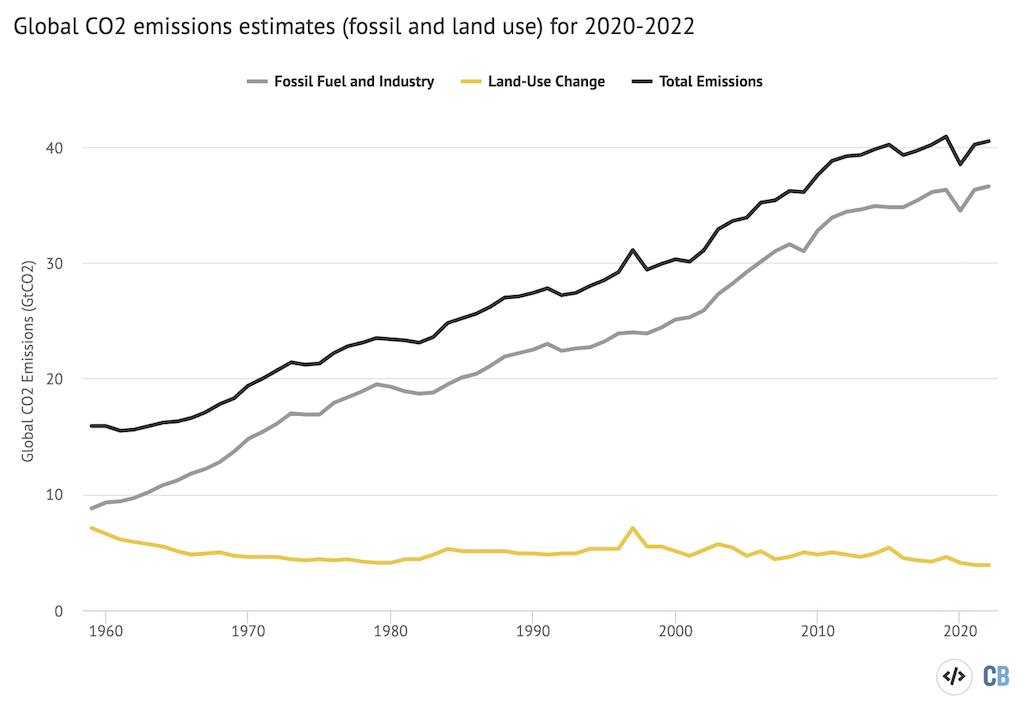
Fossil fuels like coal, oil, and natural gas are the main source of human-made carbon dioxide (CO₂). The numbers are staggering: in 2022, the world emitted over 36.8 billion metric tons of CO₂ from fossil fuels and industry, according to the Global Carbon Project. These emissions make up about 75% of all greenhouse gas emissions worldwide.
The amount of CO₂ in the atmosphere is now over 420 parts per million (ppm), the highest in at least 800,000 years—possibly several million. Before the industrial revolution, it was about 280 ppm. This sharp rise has happened in just a few generations.
What does this mean? The more CO₂ we put into the atmosphere, the more heat the Earth traps. This leads to rising temperatures, melting ice caps, and shifting weather patterns. Unless these emissions are reduced sharply, the world will not meet climate targets set in the Paris Agreement, which aims to limit warming to 1.5°C above pre-industrial levels.
It’s not just the amount, but also the speed of the change that matters. Many natural systems (like forests and oceans) cannot adapt quickly to such rapid increases. This can lead to more wildfires, dying coral reefs, and stressed crops.
A practical example: In 2022, even as renewable energy grew, global emissions rose. This shows that reducing fossil fuel use is not only about adding more renewables, but also about using less coal, oil, and gas.
Sea-level Changes
As the planet warms, glaciers and ice sheets melt, and the oceans expand as they heat up. Since 1900, global sea levels have risen about 20 centimeters (8 inches). The rate of rise is speeding up; in the past 30 years, the oceans have risen almost twice as fast as they did in the early 20th century.
Recent satellite data shows the rate is now over 3 millimeters per year. If large ice sheets in Greenland or Antarctica melt faster than expected, sea levels could rise much more—up to 2 meters (over 6 feet) by 2100 in worst-case scenarios.
Why is this important? Rising seas threaten coastal cities and small island nations. Cities like Miami, Jakarta, and Bangkok already see regular flooding during high tides. If current trends continue, tens of millions of people could be forced to move by the end of the century—creating new refugees and straining resources.
Saltwater can also move into rivers and groundwater, making farming and drinking water harder to access. In places like Bangladesh and the Nile Delta, farmers already see fields turning salty and crops failing.
A less obvious impact: insurance costs for homes and businesses in flood-prone areas are rising fast, and some insurers are leaving markets completely, making it hard for people to recover after disasters.
Extreme Weather: More Common And More Dangerous
The link between climate change and extreme weather is strong. Recent years have seen an increase in:
- Heatwaves: The summer of 2023 brought record-breaking temperatures in Europe, Asia, and North America.
- Floods: In 2022, Pakistan faced historic floods that displaced millions and killed more than 1,700 people.
- Hurricanes and Cyclones: Warmer oceans fuel stronger storms. Hurricane Ian (2022) caused over $100 billion in damage in the United States alone.
- Wildfires: Australia’s Black Summer (2019-2020) and California’s record fire seasons have destroyed homes, habitats, and air quality.
More detail shows how these events connect to climate change:
Heatwaves are becoming longer, hotter, and more frequent. In cities, the “urban heat island” effect makes temperatures even worse, especially for people without access to air conditioning or green spaces. During the 2023 Chinese heatwave, some cities saw nighttime temperatures stay above 30°C (86°F) for days, making it hard for people to recover.
Floods are not only more common, but also more damaging. Warmer air holds more moisture, so when it rains, it can pour. In Germany and Belgium in 2021, sudden floods destroyed entire villages. Developing countries are often hit harder because they have less money for flood defenses.
Storms (Hurricanes, Cyclones, Typhoons) are now often stronger because warm water is their main energy source. Super Typhoon Haiyan (2013) in the Philippines showed how storms can become more deadly, with higher storm surges and faster winds. Recovery can take years, and some communities never fully rebuild.
Wildfires burn larger areas for longer. Hotter, drier conditions dry out forests and grasslands, turning them into fuel. In Canada’s 2023 wildfire season, smoke traveled thousands of kilometers, causing air pollution warnings as far away as New York City.
A less obvious impact: after disasters, diseases can spread faster. Floods can contaminate water, leading to cholera outbreaks. Smoke from wildfires increases respiratory illnesses, especially for children and older adults.
These events do not just cause temporary problems—they reshape lives, destroy economies, and leave long-term scars on communities and nature.
Real-world Examples: Human And Environmental Impact
Climate change is not just about numbers; it is about people and places. Here are some real-world examples that show the impact:
The Maldives: A Nation At Risk
The Maldives is a nation of islands, most of which are less than two meters above sea level. As sea levels rise, the Maldives faces the real risk of disappearing under the waves. Saltwater is already contaminating freshwater supplies, and coastal erosion is forcing communities to move.
Tourism, which makes up a big part of the Maldives’ economy, is threatened as beaches shrink and coral reefs die. Some islands have invested in sea walls and artificial beaches, but these are expensive and not a long-term solution.
A practical effect: young people in the Maldives now consider emigration as their only future. The government has even discussed buying land in other countries for possible relocation—a stark example of what climate refugees may look like.
California: Wildfire Emergency
In California, longer, hotter summers and dry conditions have created a “new normal” of massive wildfires. In 2020, wildfires burned over 4 million acres—double the previous record. Thousands lost homes, and the smoke affected air quality for millions.
The economic cost is staggering. Insurance payouts have increased, and some insurers have stopped offering fire insurance in high-risk areas. Schools and businesses close during fire seasons, and power companies sometimes turn off electricity to prevent new fires.
Another detail: the fires are changing forests permanently. Some areas burn so hot that trees do not grow back, leading to a loss of habitat for wildlife. Local economies that depend on forestry or tourism suffer.
Pakistan: Floods And Food Security
The 2022 floods in Pakistan covered one-third of the country. Crops were destroyed, livestock killed, and millions lost their homes. Food prices soared, and diseases spread in crowded temporary shelters.
More than 33 million people were affected—about 15% of the population. Many small farmers lost everything. Recovery is slow, and the fear of more floods makes it hard for people to rebuild with confidence.
A less obvious impact: when food supplies are disrupted, children are at higher risk of malnutrition, which can affect their growth and brain development for life.
These stories are just a few examples of how climate change is affecting real people—and why action is urgent.
What Percentage Of Emissions Come From Fossil Fuels?
The burning of fossil fuels is the main driver of climate change. But how big is their share in global emissions?
Fossil fuels are responsible for about 75% of all greenhouse gas emissions, and nearly 90% of all carbon dioxide (CO₂) emissions.
This means that most of the gases that warm the planet come from coal, oil, and gas. Let’s break it down further.
The Breakdown: Types Of Fossil Fuels
Different fossil fuels contribute differently to emissions:
- Coal: The dirtiest fossil fuel. Used mostly for electricity and industry, coal is responsible for about 40% of CO₂ emissions from energy use.
- Oil: Used mainly for transportation (cars, trucks, ships, planes), oil makes up about 32% of energy-related CO₂ emissions.
- Natural Gas: Often seen as “cleaner,” but still a major source. Natural gas accounts for about 21% of energy-related CO₂ emissions.
Coal also produces more pollution (like sulfur and mercury) than other fuels, causing smog and health problems. Some countries, like China and India, still rely on coal for most of their electricity. Others, like Germany, are trying to phase it out completely.
Oil is found in almost every part of our daily lives—not just as fuel for cars and planes, but also as a key ingredient in plastics, fertilizers, and chemicals. This makes cutting oil use more complicated than just switching cars to electric.
Natural gas is often promoted as a “bridge fuel” between coal and renewables. It emits less CO₂ per unit of energy, but methane leaks during extraction and transport can make its climate impact worse than expected. Methane is over 80 times more powerful than CO₂ at trapping heat in the short term.
This breakdown shows that moving away from coal and oil is key to reducing emissions.
Other Sources Of Emissions
Not all emissions come from fossil fuels. Other sources include:
- Deforestation: When forests are cut down, the carbon stored in trees is released into the air.
- Agriculture: Livestock produce methane, a powerful greenhouse gas.
- Industrial Processes: Cement and steel production release other gases.
Deforestation is especially serious in the Amazon, Congo Basin, and Southeast Asia. When trees are lost, not only is carbon released, but the land also loses its ability to absorb future emissions.
Agriculture’s climate impact is often underestimated. Rice paddies emit methane, and fertilizers emit nitrous oxide—another strong greenhouse gas. Changing diets, reducing food waste, and improving farming methods can help.
Industrial processes are hard to clean up because they need high temperatures and chemical reactions that currently rely on fossil fuels. Innovations like green hydrogen or carbon capture are promising but not yet widely used.
However, these sources together account for less than 25% of total emissions. Fossil fuels remain the biggest piece of the puzzle.
Comparing Emissions: Fossil Fuels Vs. Other Sources
To help visualize the share of emissions, here is a comparison:
| Source | Share of Global GHG Emissions (%) |
|---|---|
| Fossil Fuels | ~75% |
| Deforestation & Land Use | ~13% |
| Agriculture | ~10% |
| Industrial Processes | ~2% |
This table shows just how dominant fossil fuels are in the story of climate change.
One insight for beginners: Many people think recycling or planting trees alone can solve the climate crisis, but the data shows cutting fossil fuel use is by far the most important step.
Fossil Fuels By Sector: Who Emits The Most?
Emissions from fossil fuels are not just about cars or power plants. They come from many sectors:
- Electricity and Heat Production: About 31% of emissions. Power plants burning coal, oil, or gas.
- Transportation: 16% of emissions. Cars, trucks, ships, planes.
- Industry: 24% of emissions. Making steel, cement, chemicals.
- Buildings: 6% of emissions. Heating, cooling, cooking.
- Other energy uses: 3% of emissions.
Here’s a second comparison to show the breakdown:
| Sector | Share of Fossil Fuel Emissions (%) |
|---|---|
| Electricity & Heat | 31% |
| Industry | 24% |
| Transport | 16% |
| Buildings | 6% |
| Other | 3% |
This breakdown highlights where change is most needed.
A practical example: Cleaning up electricity is often seen as “low-hanging fruit” because renewables like wind and solar are now cheap and proven. But some sectors, like aviation and heavy industry, are harder to clean up because they need fuels with high energy content or very high heat.
Why Are Fossil Fuels So Hard To Replace?
Fossil fuels are everywhere in our modern lives. They power our homes, cars, industries, and even the production of everyday items. But there are reasons why switching away from them is not easy:
- Infrastructure: Much of the world’s energy system is built for fossil fuels. Power plants, pipelines, refineries, and gas stations represent trillions of dollars of investment. Changing them takes time and money.
- Cost: In some places, coal or gas is still cheaper than renewables, especially without subsidies or carbon taxes. Poor countries may choose cheap energy to help their people escape poverty, even if it means more emissions.
- Jobs: Millions of people work in fossil fuel industries. Shutting them down quickly could cause unemployment and social unrest unless new opportunities are created.
- Energy Demand: As economies grow, energy needs rise—making it hard to cut back. For example, as more people in developing countries buy cars or air conditioners, energy demand increases.
A less obvious insight: even products like plastics, fertilizers, and medicines rely on oil and gas as key ingredients. This means that simply “stopping” fossil fuel use is not a quick switch; it requires new solutions and careful planning.
Another point: many developing countries argue that rich countries, which built their wealth on fossil fuels, should move first and help pay for the transition. This makes international agreements complex.
The Role Of Renewable Energy
The good news is that renewable energy is growing fast. Solar, wind, hydropower, and other clean sources now provide about 30% of the world’s electricity. Costs for solar and wind have fallen sharply, making them competitive with fossil fuels in many places.
Countries like Denmark, Portugal, and Uruguay now get most of their electricity from renewables. In India and China, massive solar farms are being built at record speed.
But electricity is only part of the puzzle. Transport, heavy industry, and heating are still mostly powered by fossil fuels. For renewables to take over, new technologies like electric vehicles, green hydrogen, and better batteries are needed.
Another detail: the sun doesn’t always shine and the wind doesn’t always blow. This means energy storage (like big batteries or pumped hydro) and “smart grids” are needed to balance supply and demand.
A common mistake: thinking renewables alone can solve everything quickly. The transition requires upgrading power grids, retraining workers, and making sure new energy is affordable for all.
The Cost Of Inaction: What Happens If We Don’t Change?
If fossil fuel emissions continue at today’s rate, the planet could warm by 2. 5°C to 3°C by the year 2100. What would this mean?
- Extreme Weather: More deadly heatwaves, storms, droughts, and floods.
- Sea-Level Rise: Up to 1 meter higher by 2100, flooding cities and islands.
- Food Security: Crop failures and higher prices, especially in poorer countries.
- Health Risks: More deaths from heat, disease, and pollution.
- Biodiversity Loss: Many plants and animals could go extinct.
It also means more “compound events”—like a heatwave and drought happening at the same time, making wildfires worse and water even scarcer.
These are not predictions for a distant future. Some are already happening, and will get worse without action.
A less obvious cost: financial markets are starting to see climate risks as a reason to change investments. Some banks and insurance companies are pulling out of fossil fuels, fearing losses from stranded assets (projects that become worthless if the world moves to clean energy).
What Can Individuals Do?
While governments and big companies have the most power to cut emissions, individuals can still make a difference. Here are some practical steps:
- Use less energy: Turn off lights, unplug electronics, use energy-efficient appliances.
- Choose renewable power: If possible, switch to a green energy provider.
- Travel smarter: Walk, bike, use public transport, or drive an electric car.
- Eat a more plant-based diet: Meat and dairy have a higher climate impact.
- Support climate action: Vote for leaders who take climate change seriously. Support organizations working for clean energy.
Other ideas: repair and reuse products instead of throwing them away. Buy less fast fashion. Share tools and rides with neighbors.
A less obvious tip: talk about climate change. Many people still see it as distant or not urgent. Sharing facts and stories can help build support for action.
Practical example: If you eat one less burger a week, it saves as much emissions as driving 500 km less per year. Small changes, when multiplied by millions of people, can add up.
What Should Governments And Businesses Do?
The biggest changes need big action. Here’s what experts say is needed:
- End fossil fuel subsidies: Many countries still make coal, oil, or gas cheaper with taxpayer money.
- Invest in clean energy: Build more solar, wind, and battery storage.
- Set strong climate laws: Set limits on emissions, and stick to them.
- Support workers: Help people in fossil fuel jobs move to new industries.
- Protect forests and nature: Trees absorb carbon and protect biodiversity.
Another important step: upgrade public transport, so people do not need to drive everywhere. Cities like Paris and Bogotá are building bike lanes and electric buses to make low-carbon living easier.
A key point often missed: investing in climate action is not just a cost—it creates new jobs, improves public health, and can save money in the long run.
For example, building wind and solar farms creates more jobs per dollar than fossil fuels. Cleaner air means fewer hospital visits for asthma and heart disease, saving billions in health costs.
Tracking Progress: How Do We Measure Emissions?
Measuring emissions is complex but necessary. Scientists use:
- Atmospheric monitoring: Measuring gases in the air.
- Energy statistics: Tracking how much coal, oil, and gas are burned.
- Satellite data: Watching changes in forests, ice, and cities.
New tools, like AI-powered satellites, can now detect emissions from single factories or power plants. This makes it harder for polluters to hide.
Countries are required to report their emissions to the United Nations, but some countries have better data than others. Independent checks by scientists and NGOs help keep the process honest.
A less obvious challenge: measuring emissions from land use and agriculture is tricky, because it depends on how land is used and how animals are raised. Better data and transparency are key for making real progress.
The Human Face Of Climate Change
Behind every statistic are real lives. Climate change is already affecting:
- Farmers: Struggling with new weather patterns and less water.
- Children: Facing more disease, heat, and disaster.
- Coastal communities: Losing land to the sea.
For example, in Bangladesh, rising seas and stronger cyclones force families to move inland, leaving behind homes and traditions. In Kenya, changing rainfall patterns make it harder for farmers to grow enough food.
Migration due to climate stress is increasing. The World Bank estimates over 140 million people could become “climate migrants” by 2050 in Africa, Asia, and Latin America. This can strain cities, schools, and health systems.
A less obvious impact: women and girls often suffer the most in disasters, as they may lose access to education, healthcare, and safety.
The Role Of Information And Awareness
Websites like Digital Madama play a key role in sharing trusted information. By providing clear data and real stories, we help people understand the crisis—and what they can do about it. Misinformation is common, and facts matter more than ever.
Educational campaigns, news stories, and documentaries can inspire action. For example, the film “An Inconvenient Truth” helped make climate change a household topic. Now, social media spreads news faster, but also spreads myths—so reliable information is more important than ever.
A less obvious tip: teachers and community leaders can spark change by making climate education part of everyday life, not just a once-a-year topic.
Comparing Country Emissions: Who Emits The Most?
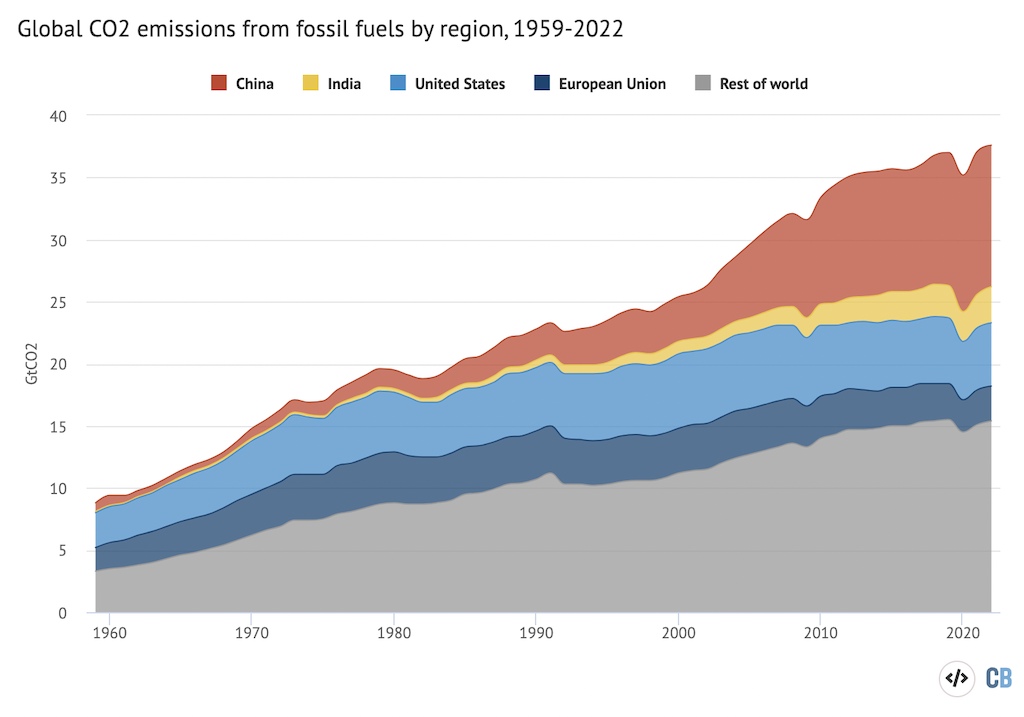
Not all countries pollute equally. The largest emitters today are:
| Country | CO₂ Emissions (2022, Billion Tons) | Share of Global Emissions (%) |
|---|---|---|
| China | 11.4 | 31% |
| United States | 5.0 | 14% |
| India | 2.7 | 7% |
| European Union | 2.4 | 6.5% |
| Russia | 1.6 | 4.3% |
These numbers show that action by just a few countries can make a big difference. But everyone needs to play a part.
A less obvious fact: when we look at emissions per person, some rich countries pollute much more than others. For example, the average American emits more than twice as much CO₂ as the average Chinese person.
Climate Justice: Who Is Most Affected?
Ironically, the people who emit the least are often hurt the most. Small island nations, poor countries, and indigenous peoples face the greatest risks—from floods, heat, and storms—even though their emissions are tiny.
This is why climate justice is a key part of the global response. Rich countries have pledged to help poorer nations adapt and grow cleanly, but progress is slow.
For example, the annual “climate finance” promised to developing nations (at least $100 billion per year) is not always delivered on time. This money is needed for building sea walls, early warning systems, and clean energy projects.
A practical point: climate justice is not just about money. It’s also about listening to local knowledge and giving affected communities a voice in decisions.
The Link Between Armed Conflict And Environmental Harm
Conflict zones often see extra environmental damage. War can lead to:
- Oil spills: Bombed pipelines and refineries.
- Forest loss: People cut trees for fuel when supplies run out.
- Toxic pollution: Military actions can release chemicals.
An example: the 1991 Gulf War caused massive oil spills in the Persian Gulf, killing wildlife and polluting water.
Recent wars in Syria and Ukraine have damaged farmland, polluted water, and destroyed infrastructure, making recovery harder. In some places, landmines and chemicals make farming dangerous for decades.
At Digital Madama, we also cover how war and environment are connected, highlighting the need for peace as part of climate action.
A less obvious insight: environmental damage can fuel more conflict, as people fight over scarce resources like water or farmland.
Sea-level Rise: More Than Just Water
When we talk about sea-level rise, it is not just about water covering land. The impacts are complex:
- Salinization: Saltwater moves into rivers and soil, harming crops and drinking water.
- Infrastructure damage: Roads, bridges, and ports can be destroyed by flooding.
- Loss of heritage: Ancient cities and cultural sites may disappear.
For example, in Venice, Italy, rising water threatens not only homes but also priceless art and history.
In the Mekong Delta, Vietnam, saltwater has moved up to 100 km inland, forcing farmers to switch from rice to shrimp or give up farming completely.
Another detail: sea-level rise can combine with storms to create “compound flooding,” making recovery slower and more expensive.
Extreme Weather And Mental Health
Climate change impacts are not only physical. People also suffer mental health effects after disasters—stress, anxiety, and trauma. In Australia, for example, many people affected by wildfires reported long-term mental health struggles.
Children can develop “eco-anxiety”—a feeling of fear about the future. Farmers facing repeated crop failures may feel hopeless and depressed. Communities forced to move lose their sense of place and belonging.
Governments and aid groups must provide not only emergency relief but also mental health support.
A less obvious tip: building community connections before disasters can help people recover emotionally when crisis hits.
Biodiversity: The Hidden Victim
Warming, pollution, and changing weather threaten plants and animals everywhere. Coral reefs are dying, forests are shrinking, and many species face extinction.
Why does this matter? Biodiversity supports food, medicine, and clean water. Losing it weakens nature’s ability to recover from disasters.
For example, bees and other pollinators are crucial for crops like fruit and coffee. If they disappear, food supplies become less secure.
A less obvious impact: healthy ecosystems (like wetlands and mangroves) act as natural barriers against floods and storms. Destroying them makes communities more vulnerable to climate disasters.

What Are The Solutions? A Path Forward
Solving the fossil fuel problem is not simple, but it is possible. Solutions include:
- Massive investment in renewables: Solar, wind, and hydropower.
- Electrification of transport: More electric cars, buses, and trains.
- Better energy storage: Batteries and smart grids.
- Nature-based solutions: Protecting forests, restoring wetlands.
- International cooperation: Climate change does not respect borders.
Other solutions: improving energy efficiency in homes and businesses, supporting local food systems, and developing new materials that use less energy.
The world’s leading scientists agree: the faster we act, the easier—and cheaper—it will be to avoid the worst impacts.
A less obvious solution: “climate adaptation”—helping people prepare for changes that cannot be stopped, like building higher sea walls or changing crops to suit new weather patterns.
Two Insights Many Miss
- Delayed action costs more: Every year we wait, the problem gets more expensive to fix. Early investment saves lives and money.
- Technology alone is not enough: Social and political change matters too. Laws, education, and public support are as important as wind turbines and solar panels.
A practical example: Germany’s energy transition (Energiewende) worked because of strong public support and clear government policy, not just new technology.
The Power Of Hope And Action
Climate change can feel overwhelming. But there are reasons for hope. Many countries, cities, and companies are making real progress. For example, Denmark now gets over 50% of its electricity from wind. India is building huge solar farms. The world’s biggest car makers are shifting to electric vehicles.
Young people around the world are demanding action, from school strikes to climate marches. Businesses are investing in clean energy, not just for the planet, but because it makes financial sense.
At Digital Madama, we believe that information leads to action. By understanding where emissions come from and what can be done, everyone can play a part in building a safer, cleaner world.
Frequently Asked Questions
What Are Fossil Fuels?
Fossil fuels are energy sources like coal, oil, and natural gas, formed from the remains of ancient plants and animals. They are burned to produce energy but release greenhouse gases that cause climate change.
They are found underground and take millions of years to form. When burned, they release energy quickly, but also release CO₂ and other pollutants.
Why Do Fossil Fuels Cause So Many Emissions?
When fossil fuels are burned, they release carbon dioxide (CO₂) and other gases that trap heat in the atmosphere. Fossil fuels are used in almost every part of modern life, making them the main source of emissions.
Some fossil fuels, like coal, release more emissions per unit of energy. Oil is used for transportation, and natural gas is used for heating and electricity. Switching to cleaner energy helps reduce emissions.
Can Renewable Energy Fully Replace Fossil Fuels?
With current technology, renewables like solar and wind can provide most electricity needs. But replacing fossil fuels in transport, industry, and heating will require new technologies and investment. Progress is being made, but the transition will take time.
Developing new energy storage, upgrading power grids, and changing how we travel and build are all part of the solution.
How Does Climate Change Affect Health?
Climate change increases the risk of heatstroke, respiratory problems, and the spread of diseases. Disasters like floods and fires also cause injuries and mental health issues. Poor air quality from burning fossil fuels is a major health risk.
For example, higher temperatures can lead to more mosquitoes, spreading diseases like malaria or dengue. Air pollution causes millions of deaths every year, especially in cities.
Where Can I Learn More About Climate Change Statistics And Solutions?
For trusted data and clear explanations, visit Digital Madama or check resources like the NASA Climate Change page. These sites offer up-to-date facts, stories, and tips for action.
Other good sources are the IPCC, World Resources Institute, and your local environmental groups.
—
Climate change is real, measurable, and urgent—but not unsolvable. By understanding the role of fossil fuels in emissions, we can take steps—big and small—to protect our planet for future generations.