Climate change is no longer a distant problem. It is now a daily reality, measured by hard numbers and visible changes in our world. People see wildfires, floods, and heatwaves more often. Scientists use climate data to understand these changes and project what may happen next. But with so many numbers, charts, and headlines, it’s easy to feel lost or overwhelmed. This guide from Digital Madama will break down the latest climate projections, highlight what the most important statistics mean, and explain how they shape our future.
We’ll focus on three key climate statistics: rising global temperatures, increasing carbon emissions, and sea-level rise. We’ll connect these numbers to real-life examples and explore how they affect people, ecosystems, and economies. You’ll also learn what can be done—by you, your community, and your government—to help slow and adapt to the crisis.
Understanding Climate Projections
Climate projections are tools that help us see possible futures for our planet. Scientists do not guess. Instead, they use powerful computer models and decades of observations. These models are built using information from many sources: weather stations, satellites, ocean buoys, and even ice cores from glaciers. Scientists feed these models with data about past temperatures, rainfall patterns, greenhouse gas emissions, and even things like volcano eruptions or changes in the sun’s energy.
These models are tested again and again. Scientists check if their models can accurately “predict” the past. If the model can show what happened over the last 100 years, it’s more likely to be right about the future. Still, projections are not certain—they show a range of possibilities, depending on human actions and how nature responds.
One example: If countries keep burning fossil fuels at today’s rate, models predict much higher temperatures and bigger impacts. But if we switch quickly to renewable energy, plant more trees, and use resources wisely, the warming will slow down.
How Do Scientists Build Climate Projections?
Imagine you want to know if it will rain tomorrow. You check the weather forecast, which uses models based on current data. Climate projections work in a similar way, but they look much further ahead—often 50 or 100 years. Scientists use scenarios to explore different futures:
- Business as usual: If nothing changes, emissions keep rising.
- Sustainable path: If the world invests in clean energy and cuts emissions.
- Middle ground: If some actions are taken, but not enough for big change.
Each scenario gives us a different set of numbers. For example, the IPCC’s “Representative Concentration Pathways” (RCPs) show how much warming is likely under each scenario. The numbers (like RCP 2. 6 or RCP 8. 5) refer to how much energy is trapped in the atmosphere by 2100.
Why Projections Are Important
Climate projections help us plan. Governments use them to decide where to build roads, power plants, and flood defenses. Farmers use projections to choose crops. Insurance companies use them to set prices for homes near the coast. Without projections, we would be reacting to disasters instead of preparing for them.
Common Misunderstandings
Many people think projections are just “guesses. ” In fact, they are based on hard science and careful math. Another common error is to focus only on the “average” outcome. Real risks often come from the extremes—the worst heatwave, the strongest hurricane, or the biggest flood.
Non-obvious insight: Projections are not just for the distant future. They help us understand risks in the next 10, 20, or 30 years—timeframes that affect today’s children and investments.
Key Climate Statistics: What Do The Numbers Show?
1. Global Temperature Rise
The Earth’s surface is warming, and the numbers are clear. Since the 1880s, scientists have collected temperature records from thousands of weather stations. Today, satellites provide nearly complete coverage, even over the oceans and polar regions.
The IPCC’s Sixth Assessment Report (2021) found that the planet is now about 1.1°C (2°F) warmer than it was before the industrial era (1850-1900). This may seem like a small change, but it’s enough to shift weather patterns, melt glaciers, and increase the risk of natural disasters.
Let’s see how recent years compare:
| Year | Global Avg. Temp. Anomaly (°C) | Compared to 1850-1900 |
|---|---|---|
| 2016 | +1.2 | Hottest year on record (tie) |
| 2020 | +1.19 | Hottest year on record (tie) |
| 2023 | +1.48 | Record-breaking heat |
What Do These Numbers Really Mean?
Each “anomaly” means how much warmer that year was compared to the average from 1850–1900. For example, +1. 48°C in 2023 means the Earth was nearly one and a half degrees warmer than before the industrial revolution. This is not just a random swing; it’s a clear upward trend.
How Fast Is It Happening?
It took about 100 years (from 1880 to 1980) for the Earth to warm by 0. 5°C. But the next 0. 6°C happened in just 40 years. That means the pace of warming is speeding up, not slowing down.
Hotter Nights, Not Just Days
A key detail: Much of the warming happens at night, not just during the day. Warmer nights mean less “cooling off” for people, animals, and crops. Heatwaves are more dangerous when there’s no relief overnight.
Key Insight: The last eight years (2015–2023) were the eight warmest on record.
Why Even Small Increases Matter
A rise of one degree may sound small, but it’s actually a huge amount of extra energy. For example, the difference between today’s climate and the last ice age was only about 4–5°C. That change was enough to cover much of North America and Europe with thick ice sheets.
A one-degree rise can make the difference between a “normal” summer and deadly heatwaves, between steady crop yields and failed harvests, or between manageable storms and disasters.
Real-world Example: Heatwaves And Human Health
In the summer of 2022, Europe faced a record-breaking heatwave. Temperatures in the UK passed 40°C (104°F) for the first time. Thousands of people, especially the elderly, suffered heat-related illnesses. Crops wilted in the fields, causing food prices to rise. Events like this are becoming more common because of the overall temperature rise.
More Examples From Around The World
- India (2022): A heatwave pushed temperatures above 49°C (120°F) in Delhi. Many people without air conditioning suffered from heatstroke. Power outages made things worse for millions.
- Canada (2021): The town of Lytton, British Columbia, reached 49.6°C (121°F)—the highest ever recorded in Canada. The next day, wildfires destroyed the town.
- Australia (2019–2020): Extreme heat contributed to massive bushfires, killing over a billion animals and causing billions in damage.
Impact On Cities
Cities are often hotter than the countryside—a problem called the “urban heat island” effect. Concrete and asphalt absorb and hold heat, making cities much warmer. Poor neighborhoods usually have fewer trees and parks, so residents face higher risks.
Impact On Food Security
Heatwaves damage crops like wheat, maize, and rice. In 2022, India banned wheat exports due to heat-damaged harvests. This led to higher prices in many other countries.
Impact On Water Supply
Higher temperatures cause more evaporation from lakes and rivers, reducing water for drinking and farming. In the western United States, shrinking snowpacks mean less water for millions of people.
A Note On Records
Every few years, a new “hottest year on record” is announced. This is not just bad luck—it’s a sign of a long-term trend. More records will be broken as the planet warms.
2. Carbon Emissions: The Driving Force
Carbon dioxide (CO₂) is the main greenhouse gas produced by humans, but there are others, like methane and nitrous oxide. Together, these gases trap heat in the atmosphere, acting like a blanket around the Earth.
Where Do Emissions Come From?
The biggest sources are:
- Burning fossil fuels: For electricity, heat, and transport (cars, planes, ships)
- Industry: Cement, steel, and chemical production
- Deforestation: Cutting down forests for farms or cities releases stored carbon
- Agriculture: Especially from cows (methane) and rice paddies
Emissions Over Time
According to the Global Carbon Project, world carbon emissions hit a record high in 2022:
- Annual CO₂ emissions: 36.6 billion metric tons (2022)
Here’s how emissions have changed over time:
| Year | CO₂ Emissions (Billion tons) | Trend |
|---|---|---|
| 1990 | 22.6 | Rising steadily |
| 2000 | 25.3 | Accelerating |
| 2010 | 33.0 | Sharp increase |
| 2022 | 36.6 | Record high |
Why Emissions Are Still Rising
Even as many countries promise to cut emissions, global totals keep increasing. Why? Because the world’s population is still growing, and developing countries are using more energy as they build roads, factories, and homes. Also, switching from coal to cleaner energy takes time and investment.
Emissions By Country
- China is now the largest single emitter, producing nearly 30% of the world’s CO₂.
- The United States is second, with about 15%.
- The European Union, India, and Russia follow.
But it’s important to remember: Wealthy countries have released the most CO₂ over time (called “historical emissions”). This is why many climate talks focus on fairness—who should cut the most, and who should pay for the damage.
Emissions By Sector
- Electricity and heat production: 25%
- Industry: 24%
- Agriculture, forestry, and other land use: 18%
- Transport: 14%
- Buildings: 6%
Key Insight
Despite climate talks and pledges, global emissions are still climbing.
Why It Matters
The more CO₂ we add, the hotter the planet becomes. But CO₂ stays in the atmosphere for hundreds of years. This means today’s emissions will keep warming the planet far into the future, even if we stop tomorrow. That’s why fast action is crucial.
Real-world Example: Air Pollution And Cities
Cities like New Delhi, Beijing, and Los Angeles often experience “smog days” where air quality is poor. Much of this pollution comes from burning fossil fuels. Besides warming the planet, these emissions cause asthma, heart disease, and millions of early deaths each year.
Health Impacts
- Fine particles (PM2.5) can enter deep into the lungs and bloodstream.
- Children and elderly are most at risk.
- In 2015, air pollution contributed to about 8.8 million deaths worldwide—more than malaria, HIV/AIDS, and traffic accidents combined.
Economic Impacts
Bad air quality means lost work days, higher health costs, and lower productivity. In Beijing, factories and schools sometimes close during severe pollution.
Social Justice
Poorer neighborhoods and communities of color are often closer to highways or factories, facing higher risks and fewer resources to cope.
Cutting Carbon: What Works
- Switching to renewable energy (solar, wind, hydro)
- Improving energy efficiency (better buildings, LED lights, efficient appliances)
- Protecting forests (which absorb CO₂)
- Electric vehicles (less pollution from cars and trucks)
- Changing diets (less red meat, more plant-based foods)
3. Sea-level Rise: The Silent Threat
When ice on land melts and flows into the ocean, or when seawater warms and expands, sea levels rise. This is one of the clearest signs of climate change, and one of the most dangerous for people living near coasts.
How Much Have Seas Risen?
According to NASA, global mean sea level has increased by about 23 centimeters (9 inches) since 1880. The rise is speeding up:
- Current rate (2013-2023): About 4.5 millimeters per year
This rate is twice as fast as it was in the 20th century.
| Year | Total Sea-Level Rise (cm) | Annual Increase (mm) |
|---|---|---|
| 1880 | 0 | – |
| 1993 | 7 | 2.1 |
| 2023 | 23 | 4.5 |
How Do Scientists Measure Sea Level?
- Tide gauges: Devices along coastlines, some in place for over 100 years
- Satellites: Since the 1990s, satellites provide global, accurate measurements
Why Is Sea-level Rise Dangerous?
- Flooding: Even a few centimeters can mean regular flooding in low-lying areas
- Coastal erosion: Beaches and wetlands disappear
- Saltwater intrusion: Saltwater can move into rivers and underground water, damaging crops and drinking water supplies
- Storm surges: Higher seas make hurricanes and typhoons much more dangerous
Key Insight
Rising seas threaten homes, cities, and coastlines worldwide.
Real-world Example: Island Nations At Risk
Maldives, a country in the Indian Ocean, is made up of low-lying islands. With much of the land only one meter above sea level, even small rises threaten its existence. Residents face saltwater flooding, loss of drinking water, and the risk of becoming climate refugees.
Other At-risk Places
- Kiribati, Tuvalu, and the Marshall Islands in the Pacific: Some communities have already moved to higher ground.
- Bangladesh: Millions live near sea level in the Ganges Delta. Floods and storms are becoming more deadly.
- Miami, USA: “Sunny day” flooding now happens several times a year, as high tides push water into streets.
Impact On Cities
By 2050, more than 570 coastal cities could see at least half a meter (20 inches) of sea-level rise, affecting over 800 million people. Major cities at risk include New York, Shanghai, Jakarta, and Lagos.
Economic Costs
Flooding damages homes, roads, airports, and power plants. Insurance costs rise, and some places may become uninsurable.
Adaptation: What Are Cities Doing?
- Seawalls: Tokyo, London, and the Netherlands use barriers to keep water out.
- Raising buildings: In Miami, some roads and homes are built higher than before.
- Managed retreat: In some places, people are moving away from the highest-risk areas.
Non-obvious Insight
Sea-level rise continues even after emissions stop, because the ocean warms and ice melts slowly. That’s why every fraction of a degree matters.
Beyond The Big Three: Other Important Trends
Climate change is not just about temperatures, emissions, or sea level. It affects almost every part of our planet.
Extreme Weather Events
Storms, droughts, wildfires, and floods are becoming more common and intense.
- Hurricanes and Typhoons: Warmer water fuels stronger storms with more rain. Storms like Hurricane Harvey (2017), Hurricane Maria (2017), and Super Typhoon Haiyan (2013) caused record damage.
- Droughts: Areas like California, the Middle East, and southern Africa see longer, hotter droughts. This leads to water shortages and crop failures.
- Floods: Heavier rain in some regions means more flash floods. In 2022, Pakistan saw the worst floods in its history, with millions of homes lost.
- Wildfires: Hotter, drier conditions fuel bigger fires. Australia’s Black Summer (2019–2020) and the 2020 fires in California and the Amazon were some of the worst ever seen.
How Climate Change Makes Weather Worse
Warmer air holds more moisture, so when it rains, it pours. On the other hand, when it’s dry, heat makes droughts worse. These extremes stress people, animals, and infrastructure.
Example: The 2021 European Floods
Unusually heavy rain in Germany and Belgium caused rivers to overflow, destroying towns and killing over 200 people. Scientists found that climate change made such heavy rain more likely.
Melting Ice And Snow
Glaciers and polar ice are shrinking quickly.
- Arctic sea ice is disappearing at a rate of about 13% per decade. In summer, the Arctic could be ice-free by the 2030s.
- Greenland’s ice sheet lost 4,700 billion tons of ice between 1992 and 2021. This is enough to raise global sea levels by about 13 millimeters (half an inch).
- Antarctica is losing ice too, especially from its western side.
Why Does Melting Ice Matter?
- Sea-level rise: Melting land ice adds water to the oceans.
- Weather patterns: Less sea ice changes winds and ocean currents, affecting weather far from the poles.
- Wildlife: Polar bears, seals, and penguins lose their homes and hunting grounds.
Example: Glacier Retreat
In the Alps, Andes, and Himalayas, glaciers are shrinking. Communities that depend on glacier melt for drinking water and farming face shortages.
Ocean Warming And Acidification
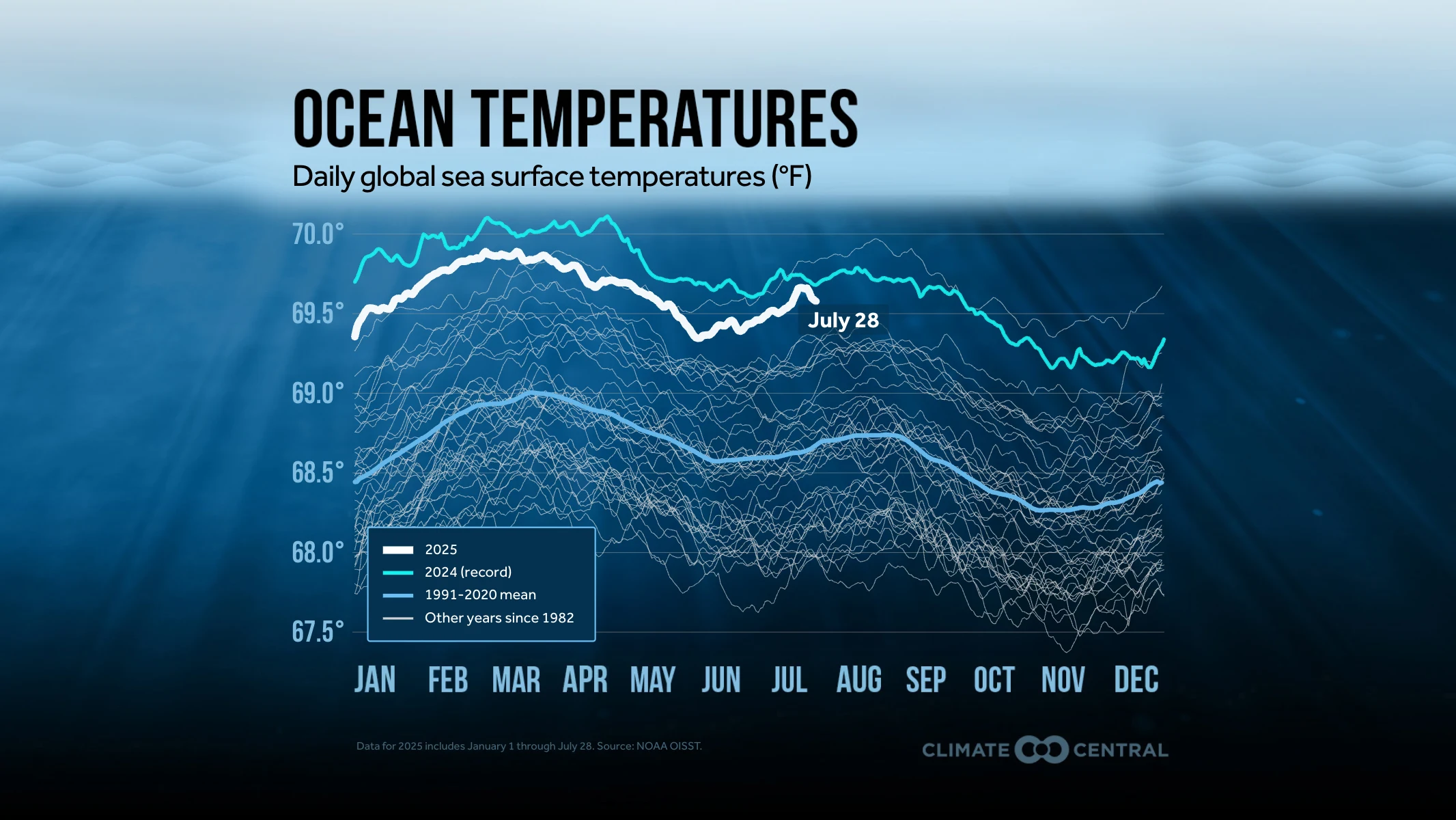
The oceans absorb most of Earth’s excess heat (over 90%) and about a third of CO₂ emissions.
- Marine heatwaves: Sudden spikes in ocean temperature can kill coral reefs and fish. In 2016, Australia’s Great Barrier Reef saw huge coral die-offs.
- Ocean acidification: When CO₂ dissolves in seawater, it forms acid. This makes it harder for shellfish, corals, and some plankton to build their shells. Fisheries and coastal communities are at risk.
Why Are Healthy Oceans Important?
Oceans provide food for over a billion people, jobs for millions, and help control the global climate. Acidification and heat threaten these benefits.
Example: Coral Reefs
Coral reefs support a quarter of all marine life. But they are very sensitive to temperature. With just 1. 5°C of warming, up to 90% of reefs could disappear. This would hurt fishers, tourism, and coastal protection.
What The Projections Mean For Our Future
Climate projections are not just numbers—they point to real risks for people, nature, and the economy.
Risks To People
The numbers are clear: Climate change will affect almost everyone. Some risks are direct, like heatwaves or floods. Others are less obvious but just as serious.
- Health: More heatwaves increase deaths from heatstroke and heart problems. Warmer temperatures help diseases like malaria and dengue spread.
- Food: Crops like wheat, maize, and rice grow less well in high heat and drought. This raises food prices, especially for the poor.
- Water: Some places get less rain (droughts), others get more (floods). Freshwater becomes less reliable.
- Homes: Coastal cities and small islands at risk from rising seas.
Example: Health And Disease
In Europe, summer heatwaves have killed thousands. In the US, extreme heat is now the leading cause of weather-related deaths. Warmer temperatures also mean mosquitos spread diseases like Zika and dengue to new regions.
Example: Food Security
In Africa, droughts have cut harvests, causing hunger and forcing families to move. In Central America, hurricanes and droughts have pushed people to migrate north.
Example: Water Conflict
In the Middle East, countries like Iraq and Syria already face water shortages, increasing the risk of conflict.
Risks To The Environment
Plants, animals, and entire ecosystems are in danger.
- Coral reefs: Up to 99% may disappear if warming reaches 2°C.
- Forests: Fires and pests threaten forests like the Amazon and Canada’s boreal woods.
- Wildlife: Many species may go extinct if they cannot adapt or move.
Example: Amazon Rainforest
The Amazon is sometimes called the “lungs of the planet,” storing huge amounts of carbon. Deforestation and warming threaten to turn parts of it into savanna, releasing more carbon and making climate change worse.
Example: Polar Regions
Polar bears and penguins depend on sea ice. As ice shrinks, they find it harder to hunt and raise their young. Some scientists warn these animals could disappear in the wild this century.
Social And Economic Impacts
- Migration: People may have to move as their homes become unlivable.
- Conflicts: Competition for water and food can lead to tension and violence.
- Cost: Disasters, health problems, and lost productivity may cost trillions of dollars each year.
Example: Migration
In Bangladesh, coastal flooding forces thousands to move to crowded cities each year. In Central America, climate disasters are one reason people head for the US border.
Example: Insurance
In the US, some insurance companies have stopped covering homes in wildfire or flood zones. Homeowners must pay more or risk losing everything.
Example: Jobs
Some industries—like coal mining, fishing, or farming—face big changes. Workers need new skills and support.
Example: Tourism
Beaches, ski resorts, and coral reefs are at risk. This threatens jobs and local economies.
Human Impact: Stories Behind The Numbers
Numbers can feel abstract, but climate change is already changing lives everywhere.
- In Bangladesh, millions live in low-lying river deltas. Each year, floods force families to move. Many lose their homes, farmland, and income.
- In California, wildfire smoke keeps children indoors for weeks, closing schools and sports.
- In Africa’s Sahel region, droughts push farmers off their land, increasing poverty and migration.
More Human Stories
- Pacific Islands: Children in Tuvalu learn that their country might disappear under the sea in their lifetime.
- Elderly in France: In the 2003 heatwave, thousands of older people died, many living alone without air conditioning.
- Farmers in India: Suicide rates rise during droughts when harvests fail and debts grow.
- Indigenous Peoples: In the Arctic, native peoples struggle as ice melts and traditional hunting becomes impossible.
Social Inequality
Climate change does not affect everyone equally. Poorer communities, people of color, and those in developing countries often face the highest risks, with the fewest resources to adapt. This is called “climate injustice. ”
Youth And The Future
Young people around the world are protesting for climate action. They know that the choices made today will shape their future—where they can live, what jobs they will have, and what kind of planet they will inherit.
Why Projections Differ: Understanding Uncertainty
You may notice that different reports show different numbers—one says sea level will rise 30 cm, another says 60 cm. This is not because the science is weak, but because the future is not fixed.
Sources Of Uncertainty
- Future emissions: Will the world cut emissions quickly, or keep burning fossil fuels?
- Natural systems: How will forests, oceans, and ice sheets respond? Will they absorb more carbon, or release it?
- Technology: Will we invent new ways to capture or store carbon? Will electric cars or green hydrogen become affordable?
- Society: Will people accept new policies, or resist change?
How Scientists Communicate Uncertainty
Scientists use “ranges” and “confidence levels. ” For example, the IPCC might say, “Sea level could rise between 30 and 110 cm by 2100, with medium confidence. ” This does not mean they don’t know; it means they are honest about what is possible.
Example: “very Likely” Means 90–100% Chance. “likely” Means 66–100%.
Why It Matters
Planning for the future means preparing for the range of possible outcomes—not just the “average. ” For example, cities may build higher flood barriers or stronger buildings to be safe.
Non-obvious insight: The biggest risks may come from the “tail” of the probability curve—the rare but extreme events.
How To Read Projections
Look for the scenario: Are numbers based on “business as usual,” or on strong climate action? Always check the time frame: 2050 is different from 2100.
What Can We Do? Action Steps For A Safer Future
Climate change is a huge challenge, but there are solutions at every level: personal, local, national, and global.
What Individuals Can Do
- Reduce energy use: Turn off lights, unplug devices, and use energy-efficient appliances. Small changes add up over time.
- Choose clean transport: Walk, cycle, use public transport, or drive electric vehicles. Carpool when possible.
- Eat less meat: Livestock farming produces a lot of greenhouse gases. Even cutting back a few meals per week helps.
- Cut waste: Recycle, compost, and avoid single-use plastics. Buy only what you need.
- Support climate action: Vote for leaders who take climate seriously, join community projects, or support renewable energy. Use your voice on social media or in local meetings.
- Plant trees and support green spaces: Trees absorb carbon and cool cities.
- Educate yourself and others: Learn more about climate change and share reliable information.
Example: Food Choices
Producing one kilogram of beef creates about 60 times more emissions than producing one kilogram of beans. Shifting to more plant-based meals can cut your carbon footprint quickly.
Example: Travel
Flying less, or choosing trains or buses, can reduce emissions. If you must fly, consider offsetting your emissions by supporting renewable energy or reforestation projects.
What Governments And Businesses Must Do
- Set strong climate laws: Cap emissions and encourage clean energy. Enforce rules on pollution and efficiency.
- Invest in renewables: Solar, wind, and hydro power can replace coal and oil. Support research and lower costs.
- Protect forests and oceans: Nature absorbs CO₂ and helps cool the planet. Support conservation, stop illegal logging, and restore damaged lands.
- Adapt to change: Build flood defenses, create heat plans, and help communities prepare. Plan for sea-level rise and water shortages.
- Help the vulnerable: Support poor countries and people most at risk. Share technology and provide funding for adaptation.
- Promote green jobs: Support training for workers in renewable energy, energy efficiency, or climate adaptation.
Example: Urban Planning
Cities can plant more trees, create parks, and use “cool roofs” to lower temperatures. Building codes can require energy efficiency and flood protection.
Example: Corporate Action
Companies can set “net zero” goals, invest in clean energy, and report their emissions honestly. Some are creating “circular” products that can be reused or recycled.
A Deeper Look: Comparing Emission Reductions
To see how different actions add up, here’s a comparison of potential emission savings:
| Action | Potential CO₂ Reduction (per year, million tons) |
|---|---|
| Switching to renewable energy (global) | 4,000–7,000 |
| Electric vehicles (global adoption) | 1,000–1,500 |
| Halving food waste | 2,000–2,500 |
| Halving deforestation | 1,500–2,000 |
More Examples
- Improving home insulation: Saves energy and cuts heating/cooling emissions.
- Smart agriculture: Using less fertilizer and water, planting cover crops.
- Public transport: Buses and trains are much less polluting per person than cars.
Common Mistakes To Avoid
- Thinking one person cannot make a difference: Small steps, multiplied by millions, add up.
- Believing only technology can solve the problem: Behavior, policy, and nature-based solutions are just as important.
- Waiting for “the perfect solution: ” Many good solutions exist now. Start with what you can do.
Non-obvious Insights: What Beginners Miss
Many people believe climate change is only about weather, but it affects much more. Here are two important points often overlooked:
- Feedback Loops: Some changes make warming worse. For example, as Arctic ice melts, it reflects less sunlight, causing even more heating. This “feedback” can speed up climate change beyond current projections.
- Example: Thawing permafrost in Siberia releases methane, a powerful greenhouse gas.
- Example: Burning forests release CO₂, and fewer trees mean less carbon absorbed.
- Tipping Points: If certain thresholds are crossed, change may become rapid and unstoppable. For example, if the Amazon rainforest dries out too much, it could turn into grassland, releasing huge amounts of CO₂.
- Other Tipping Points: Collapse of the Greenland ice sheet, shutdown of Atlantic ocean currents, or death of coral reefs.
- Why It Matters: Tipping points mean some changes cannot be reversed, even if we cut emissions later.
- Lag Time: The climate system responds slowly. Emissions today cause warming decades later. This means we must act before the worst impacts are visible.
- Regional Impacts: Climate change does not affect all places equally. Some regions may get wetter, others drier; some cooler, others hotter. Local action must match local risks.
- Equity and Justice: Solutions must be fair. The people least responsible for emissions often suffer most. Rich countries have a duty to help poorer nations adapt.
Understanding these ideas helps explain why fast action is so important.
The Role Of Data And Websites Like Digital Madama
Reliable data is key for understanding and fighting climate change. Websites like Digital Madama provide the latest statistics on climate change, environmental disasters, and how human actions—like wars or deforestation—affect the planet. By making complex data clear, Digital Madama helps readers, teachers, and policymakers see the big picture and make informed choices.
How To Use Climate Data
- Stay informed: Check for updates, especially after big events (heatwaves, floods, fires).
- Compare regions: See how your country or city is changing compared to others.
- Spot trends: Are emissions rising or falling? Is your city getting hotter, drier, or wetter?
- Take action: Use data to push for better policies or personal changes.
Reliable Sources
For more scientific sources and up-to-date reports, check out the NASA Climate Change Vital Signs page.
Frequently Asked Questions
What Is The Difference Between Weather And Climate?
Weather is what you see outside from day to day—like rain, sun, or wind. Climate is the average of these conditions over a long time (usually 30 years or more). Climate change means long-term shifts, not just one hot summer.
How Much Has The Earth Warmed Already?
According to the IPCC, Earth’s average surface temperature has risen about 1.1°C (2°F) since the late 1800s. This may not sound like much, but it is enough to cause more heatwaves, melting ice, and rising seas.
Can We Stop Climate Change Completely?
We cannot stop all climate change, because the planet is already warmer and some impacts are locked in. But we can slow it down and prevent much worse effects by cutting emissions and adapting to changes.
What Are The Biggest Sources Of Greenhouse Gases?
The main sources are:
- Burning fossil fuels for electricity, heat, and transport
- Deforestation
- Agriculture, especially livestock
What Can I Do If I Feel Overwhelmed By Climate News?
Start with small steps: save energy, eat less meat, support clean policies, and talk about climate with friends and family. Remember, millions of people working together can create real change.
Why Do Scientists Say “1.5°c Warming” Is Important?
Many impacts get much worse above 1. 5°C. Coral reefs, ice sheets, and food security are at higher risk. That’s why the Paris Agreement set 1. 5°C as a target.
Is It Too Late To Act?
No. Every fraction of a degree, every ton of emissions matters. The sooner we act, the safer the future will be.
—
The numbers are clear, and the impacts are real. Climate projections show that our choices today shape the world of tomorrow. With strong action and clear information, like that shared on Digital Madama, we can build a safer, fairer, and more stable future for everyone.