Climate change is no longer a far-off problem waiting in the wings. Today, it is a measurable reality—one that is visible in rising temperatures, melting ice caps, shifting weather, and the data collected by scientists around the world. These numbers do not lie; they give us a clear picture of what is happening to our planet and what this means for all living things. At Digital Madama, we believe that understanding climate change through data is the first step to creating real change. By exploring the numbers, real-world examples, and the deeper meaning behind the trends, we can see both the urgency of the crisis and the paths forward.
Climate data can seem complicated, but it is the key to understanding what is happening. By looking at the facts, we can see the changes, understand the risks, and find the best way to take action—both as individuals and as a society.
The story of climate change is told through the numbers. Let’s break down what the data is showing us, why it matters, and what we can do.
The Power Of Climate Data
Data is more than just numbers on a page. It is a powerful tool that helps us see patterns, make predictions, and understand what is at stake. For climate change, data comes from many sources: satellites, weather stations, ocean buoys, and even citizen science projects. By looking closely at the numbers, we can track how things have changed and see where we might be heading.
How Climate Data Is Collected
Modern technology allows us to collect climate data in ways that were impossible just 50 years ago. Satellites orbiting the Earth measure the temperature of the land, sea, and atmosphere. Weather stations record daily highs and lows. Ocean buoys drift in the water, tracking temperature and acidity.
Scientists also drill ice cores from Antarctica and Greenland, which act as time capsules. These ice cores contain tiny bubbles of ancient air, letting us see what the climate was like thousands of years ago.
Citizen science also plays a growing role. Everyday people collect rainfall in their backyards or track changes in plant flowering times. These observations, combined with high-tech measurements, help scientists build a complete picture.
Turning Data Into Decisions
One of the biggest advantages of using data is that it cuts through opinion and shows us the facts. This is especially important for a topic as complex and sometimes controversial as climate change. Numbers can show us, without bias, how much the world has warmed, how much ice has melted, and how sea levels have risen.
For example, when governments set policies to reduce emissions, they rely on data to measure progress. Businesses use climate data to prepare for supply chain risks, like when floods or fires might interrupt deliveries. Farmers use weather and rainfall data to decide when to plant their crops.
Insurance companies use climate data to price policies and predict future disasters.
Climate data does not just tell us what is happening. It allows us to plan, adapt, and respond in smarter ways.
Why Data Can Be Trusted
There is often confusion or mistrust about climate data. But it’s important to know that scientists use multiple methods, check their results with each other, and share their findings openly. When scientists from different countries and organizations get the same results using different tools, it builds confidence in the data.
Global Temperature Rise: The Numbers Tell The Story
Perhaps the most direct way to see climate change is by looking at global temperatures. For over a century, scientists have measured the average temperature of the Earth’s surface. The data is clear: our planet is getting warmer.
Key Statistic 1: Average Global Temperature Rise
Since the late 19th century, the average surface temperature of the planet has increased by about 1.1°C (2°F). Most of this warming has happened in just the last few decades. According to NASA and the National Oceanic and Atmospheric Administration (NOAA), the last eight years have been the hottest ever recorded. The year 2023 was the warmest on record, with temperatures about 1.18°C higher than the pre-industrial average.
This may sound like a small number, but in the world of climate science, even a fraction of a degree can have massive effects. To put it in context: during the last Ice Age, global temperatures were only about 4 to 5°C cooler than today, but the world looked completely different.
Why Even Small Increases Matter
It is easy to think that a change of just one degree is not important. But the climate is a delicate system. Small changes can shift weather patterns, change how rain falls, and affect everything from crops to the spread of diseases.
For example, mosquitos that carry malaria are now being found in areas that were once too cool for them.
What Does This Mean For Us?
A warmer planet means more heatwaves, longer droughts, and changes in rainfall patterns. Cities around the world have experienced record-breaking heat. For example, in July 2023, Phoenix, Arizona, saw 31 consecutive days with temperatures above 43°C (110°F)—a new record for the city. These heatwaves are not just uncomfortable—they can be deadly, especially for the elderly, children, and people with health problems.
Heatwaves are also becoming more frequent and more intense in places that were not used to extreme heat. For example, in 2022, the United Kingdom recorded its hottest day ever, reaching 40°C (104°F). This put great stress on the country’s health system, public transport, and even food supply chains.
More Than Just Hotter Summers
Higher average temperatures do not mean that every place gets warmer the same way. Some places may see more rain, while others get drier. Snow and ice melt earlier in the year, changing river flows and affecting water supplies. In some regions, spring arrives weeks earlier than it did 50 years ago, disrupting plant and animal life cycles.
Non-obvious Insight
Many people think temperature rise is uniform everywhere, but the Arctic is warming up to four times faster than the global average. This is called Arctic amplification, and it is causing rapid ice melt, which affects weather patterns across the globe.
How This Affects The Rest Of The World
The fast warming in the Arctic does not stay in the Arctic. When ice melts, it exposes dark ocean water, which absorbs more heat. This changes wind patterns and can create strange weather in far-away places, like longer cold spells in North America or Europe.
Another effect is that permafrost—frozen soil in the far north—is starting to melt. This releases more greenhouse gases, making the warming even faster.
Carbon Emissions: The Driving Force
If temperature rise is the symptom, carbon emissions are a major cause. When we burn fossil fuels like coal, oil, and gas for energy, we release carbon dioxide (CO2) and other greenhouse gases into the atmosphere. These gases trap heat, causing the planet to warm.
Key Statistic 2: Global Carbon Dioxide Levels
Before the Industrial Revolution, CO2 levels in the atmosphere were about 280 parts per million (ppm). In 2023, this number reached over 420 ppm—the highest in at least 800,000 years, according to the Scripps Institution of Oceanography. Each year, humans emit about 36 billion tons of CO2, mostly from energy production, transportation, and industry.
Here is a simple comparison of CO2 levels over time:
| Year | Atmospheric CO2 (ppm) |
|---|---|
| 1750 | ~280 |
| 1950 | ~310 |
| 2000 | ~370 |
| 2023 | ~420 |
Why These Numbers Matter
The amount of CO2 in the air today is not just a little higher than in the past—it is *much* higher. For almost a million years, CO2 levels have never gone above 300 ppm. The sharp rise since 1950 is called the “hockey stick” because of the sudden upward curve on climate graphs.
What Does This Mean For The Future?
If we continue on this path, scientists warn that we could see warming of 2°C or more by the end of this century. This would bring much more severe effects than we see today—more extreme heat, droughts, floods, and rising sea levels.
The Tipping Point
Many climate experts warn about passing certain limits, known as tipping points. If the planet warms by 1. 5°C or 2°C, some changes could become permanent and very hard to reverse—like the collapse of major ice sheets or the death of most coral reefs.
This is why countries around the world agreed in the Paris Agreement to keep warming “well below 2°C. ”
Real-world Example
In 2022, China, the world’s largest emitter, produced nearly 11.5 billion tons of CO2. The United States emitted about 5 billion tons, and India about 2.7 billion tons. While developed countries have contributed most of the emissions so far, emerging economies are catching up quickly as they grow.
The Challenge Of “historical Emissions”
It is important to remember that while countries like China and India are now the biggest emitters, Europe and North America have released the most CO2 over the past 200 years. This history shapes global climate talks and the debate about who should pay for solutions.
Non-obvious Insight
It’s not just CO2 that matters. Methane (CH4) and nitrous oxide (N2O) are also powerful greenhouse gases. Methane, for example, has more than 25 times the warming effect of CO2 over a 100-year period, even though it is less common. Livestock, landfills, and leaking natural gas pipes all add methane to the air.
Fast And Slow Warming
Methane does not last as long in the atmosphere as CO2, but while it is there, it traps much more heat. This means that reducing methane emissions can quickly slow warming. For example, fixing leaking natural gas pipelines or changing how we manage waste can make a big difference in just a few years.
Sea-level Rise: Oceans On The Move
The world’s oceans are rising, and this is one of the clearest signs of climate change. Sea levels rise for two main reasons: melting glaciers and ice sheets add water to the ocean, and warmer water expands.
Key Statistic 3: Global Sea-level Rise
Since 1900, global sea level has risen by about 20 centimeters (8 inches). But the rate is speeding up. In the last 30 years alone, sea level has risen by about 9 centimeters (3.5 inches). According to the Intergovernmental Panel on Climate Change (IPCC), sea level could rise between 30 and 100 centimeters (1 to 3 feet) by 2100, depending on how much more warming occurs.
Here’s a look at the rising trend:
| Year | Global Mean Sea Level Rise (cm) |
|---|---|
| 1900 | 0 |
| 1970 | 6 |
| 2000 | 14 |
| 2023 | 20 |
Why Is The Rate Increasing?
Sea level rise is not steady; it is getting faster. As more ice from Greenland and Antarctica melts, and as oceans warm, the rise accelerates. This means that future generations could see even bigger jumps in sea level.
What Does This Mean For Coastal Communities?
Rising sea levels threaten millions of people living near the coast. Cities like Jakarta, Miami, and Dhaka face regular flooding. In some places, entire communities have had to move. Saltwater is also moving into freshwater supplies and farmland, making it harder to grow food and get clean water.
The Cost Of Coastal Protection
Building sea walls, moving buildings, and protecting infrastructure is expensive. The World Bank estimates that by 2050, more than 570 coastal cities could face annual flood damages of over $1 trillion if no action is taken. Some areas will become too costly to protect, forcing people to relocate.
Real-world Example
Kiribati, a small island nation in the Pacific Ocean, is already losing land to the sea. The government has bought land in Fiji as a possible new home for its people if their islands become unlivable.
Other examples include parts of Louisiana in the United States, where entire villages have moved due to land loss, and the Maldives, where tourism revenue is now used to build higher sea walls.
Non-obvious Insight
Sea level does not rise equally everywhere. Local factors like ocean currents, land sinking, and even how much groundwater is pumped out can make some places rise faster than others. For example, New Orleans is sinking in addition to facing sea-level rise.
Compound Risks
In some places, the effects of sea-level rise combine with more intense storms, leading to “compound flooding. ” This means that when a hurricane hits, storm surges travel farther inland, causing even more damage than in the past.
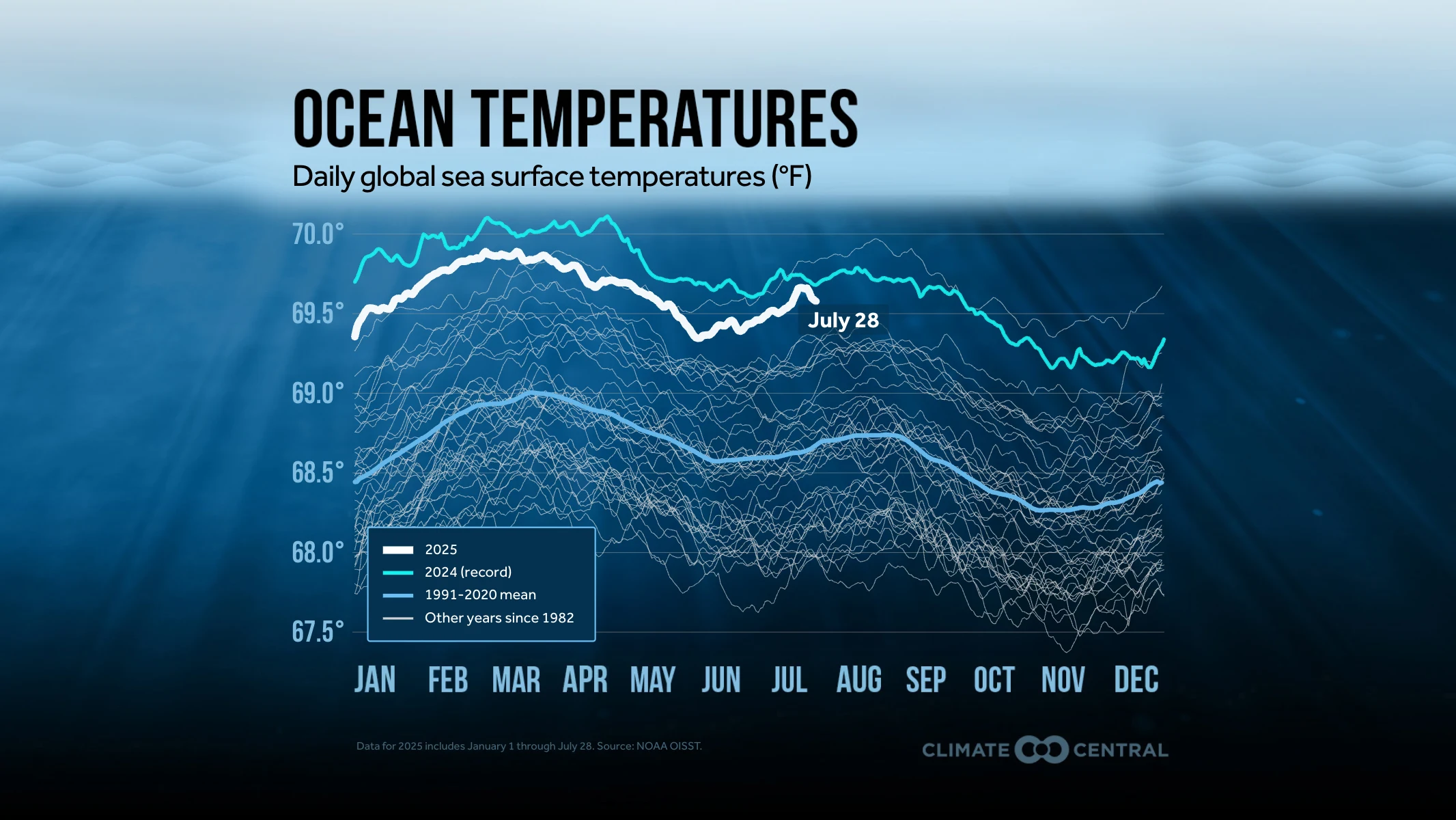
Credit: www.climatecentral.org
Extreme Weather Events: Data And Reality
Another clear sign of climate change is the increase in extreme weather events. These include hurricanes, floods, wildfires, and droughts. Scientists use careful data analysis to track changes in how often and how severe these events are.
Key Data On Extreme Weather
- The number of major hurricanes (Category 3 or higher) in the Atlantic has doubled since the 1980s.
- In 2023, Canada experienced its worst wildfire season ever, burning more than 18 million hectares—an area larger than Greece.
- Europe saw record-breaking heatwaves in 2022 and 2023, causing thousands of deaths.
More Examples Of Extreme Events
- Australia’s “Black Summer” bushfires of 2019–2020 burned over 18 million hectares, killed or displaced an estimated 3 billion animals, and caused air pollution as far away as New Zealand.
- In 2021, severe flooding in Germany and Belgium killed more than 200 people and destroyed thousands of homes, with damages over $40 billion.
Human And Environmental Impact
Extreme weather destroys homes, farms, and infrastructure. It can also disrupt food supplies, cause power outages, and put people’s health at risk. For example, Pakistan suffered devastating floods in 2022 that affected over 33 million people, destroyed crops, and left millions homeless.
Hidden Costs
The effects go beyond what we see on the news. After disasters, mental health problems often rise. Children can miss months of school. Diseases like cholera can spread in floodwaters. Insurance costs go up, and some people can no longer get coverage for their homes.
Wildfires not only destroy forests and homes but also release more CO2, making the problem worse. Smoke from wildfires can travel thousands of kilometers, causing poor air quality in cities far away from the fire.
Long-term Recovery
Some communities never fully recover from extreme events. Rebuilding can take years, and repeated disasters can make it impossible for people to stay in their homes. Climate change increases the risk of “climate migration,” where people are forced to move because their environment is no longer safe or livable.
Melting Ice: Glaciers, Ice Sheets, And Permafrost
Melting ice is one of the most visible and dramatic signs of a warming planet. This includes glaciers in the mountains, the Arctic sea ice, and the huge ice sheets of Greenland and Antarctica.
Key Data On Melting Ice
- The Arctic sea ice minimum (the lowest amount of ice in September) has shrunk by about 13% per decade since 1979.
- Greenland is losing about 280 billion tons of ice each year.
- Glaciers worldwide lost over 9,000 gigatons of ice between 1961 and 2016.
Visual Signs
Satellite images show the shrinking of Arctic sea ice each year. In the Alps, famous glaciers are disappearing, changing tourism and water supplies. In Alaska, some glaciers have retreated by kilometers in just a few decades.
Why Does Melting Ice Matter?
Melting ice contributes to sea-level rise. It also affects local communities and wildlife. For example, polar bears depend on sea ice to hunt seals. As the ice disappears, their food sources shrink, and their populations are at risk.
Effects On People
Many communities, especially in the Himalayas, Andes, and Alps, depend on glacier melt for water during the dry season. If glaciers shrink or disappear, water shortages could affect millions of people, agriculture, and hydropower.
Melting permafrost (frozen ground) in the Arctic is releasing methane and carbon dioxide, creating a dangerous feedback loop: more warming leads to more melting, which leads to even more warming.
Risks Of Melting Permafrost
When permafrost thaws, it also weakens the ground, damaging roads, pipelines, and buildings. In some places, old diseases trapped in frozen soil are being released as the ground thaws, creating new health risks.
Real-world Example
In the Himalayas, melting glaciers threaten the water supply for hundreds of millions of people who depend on rivers fed by glacial melt.
In Alaska, entire villages built on permafrost are sinking, and some have had to relocate at great expense.
Ocean Changes: Warming, Acidification, And Coral Bleaching
The oceans are not just rising—they are also getting warmer and more acidic. This has huge impacts on marine life and on people who depend on the sea for food.
Key Data On Ocean Changes
- The ocean has absorbed about 90% of the extra heat caused by greenhouse gases since the 1970s.
- Oceans are now 0.8°C warmer on average than in 1900.
- The pH of surface ocean water has dropped from about 8.2 to 8.1, making it more acidic.
More On Ocean Warming
Because water holds heat much better than air, even a small change means a lot of energy. Warmer oceans drive stronger hurricanes and typhoons, change fish migration patterns, and damage coral reefs.
Why Does This Matter?
Warmer oceans lead to stronger storms and can kill coral reefs. Acidic water makes it harder for shellfish and corals to build their skeletons. Coral bleaching events are becoming more common; for example, the Great Barrier Reef in Australia has suffered five mass bleaching events since 2016.
Impact On Food Security
About 3 billion people get their main source of protein from seafood. As fish move to cooler waters or populations shrink, food supplies are at risk. Some communities have already seen important fish like cod or salmon become scarce.
Coral Reefs At Risk
Coral reefs support a quarter of all marine life. They also protect coastlines from storms and bring in billions of dollars through tourism. When reefs die, fish leave, coastlines erode faster, and local economies suffer.
Real-world Example
Fishermen in the Philippines have seen catches drop because of coral loss, affecting their income and food security.
In the Caribbean, some islands have lost much of their coral, leading to a drop in tourism and income.
Environmental Disasters And Human Conflict
Climate change is not just an environmental issue—it also affects society and security. Extreme weather and rising seas can force people to move, create food shortages, and even contribute to conflict.
How Climate Change Fuels Disasters
- Droughts can lead to failed crops and hunger, especially in Africa and parts of Asia.
- Floods can destroy homes and spread disease.
- Heatwaves can kill thousands of people and cause power blackouts.
Social Stress And Migration
When disasters destroy homes, families are forced to move. The United Nations estimates that about 20 million people are displaced every year by weather-related events. This can lead to crowded shelters, strained resources, and even tension between newcomers and existing communities.
Climate And Conflict
Research shows that climate change can increase the risk of conflict. When resources like water or farmland become scarce, people may fight over them. For example, the Syrian civil war was partly fueled by a long drought that forced many farmers to leave their land.
More Examples
In the Sahel region of Africa, competition over shrinking water supplies and grazing land has fueled violence between groups. In Central America, failed crops from drought have forced people to migrate north, sometimes leading to increased border tensions.
Environmental Harm From Armed Conflicts
Wars can damage the environment directly—by destroying forests, polluting water, and releasing toxic chemicals. At Digital Madama, we highlight how armed conflicts harm the environment and make it even harder to recover from disasters.
“double Disasters”
When war and climate disasters happen together, recovery is much harder. For example, in Yemen, both conflict and water shortages have led to a severe humanitarian crisis.
Climate Change And Global Inequality
Not all countries and people are affected equally by climate change. Wealthy countries have more resources to adapt, while poorer countries are often hit hardest.
Key Data On Inequality
- Small island nations contribute less than 1% of global emissions but face the worst risk from sea-level rise.
- Africa, with only about 4% of global emissions, suffers the most from droughts and food insecurity.
Burden On Vulnerable Groups
Within countries, poor families, the elderly, and people with disabilities are often least able to prepare for or recover from disasters. They may live in the most at-risk areas or have fewer resources to rebuild.
Why Is This Important?
Climate change is a justice issue. Those who did the least to cause the problem often suffer the most. This makes it critical for rich countries to help poorer ones adapt and to reduce emissions as fast as possible.
Fairness In Climate Action
International climate agreements include rules for “climate finance,” where wealthy nations help pay for adaptation and clean energy in developing countries. However, promises are not always kept, and funding is often less than what is needed.
The Science Behind Climate Data: How Do We Know?
People often ask, “How can we trust the data? ” Climate science is based on careful measurements and review by experts. Satellites measure temperature, sea level, and ice cover. Weather stations record temperatures and rainfall. Scientists use computer models to predict future changes.
How Climate Models Work
Climate models are complex computer programs that simulate how energy moves through the Earth’s atmosphere, oceans, and land. They use math, physics, and real-world data. Scientists test these models by seeing how well they match past changes. Models that can “predict the past” are used to look at possible futures.
Non-obvious Insight
Climate models are not perfect, but they have been remarkably accurate in predicting trends over the last 40 years. When models include greenhouse gases, they closely match what has actually happened.
Models Guide Decisions
Governments and businesses use climate models to plan for the future. For example, city planners use flood risk models to decide where to build, and energy companies use models to prepare for heatwaves or storms.
Data In Action: Real-world Examples
Numbers become most powerful when they connect to real stories. Here are some ways climate data has helped people make better decisions:
- The Netherlands uses sea-level data to build better flood defenses, protecting millions from rising water.
- California tracks wildfire risk using climate and weather data, helping firefighters prepare and respond.
- Farmers in Africa use rainfall data to decide when to plant crops, reducing the risk of crop failure.
More Success Stories
- Bangladesh has reduced deaths from cyclones by using early warning systems and shelters, all based on climate and weather data.
- In Japan, city officials use rainfall data to adjust flood gates and protect neighborhoods during typhoons.
What The Trends Tell Us About The Future
The numbers are sobering, but they are not destiny. By understanding the trends, we can make better choices. Here’s what the data suggests:
- If emissions stay high, the world could warm by 2.5–4.5°C by 2100.
- We could see more frequent and severe disasters, from floods to wildfires.
- Some regions may become unlivable due to heat or drought.
- Food and water shortages could become more common.
The Importance Of Action Now
The sooner we cut emissions, the better our chances of avoiding the worst impacts. Delaying action makes solutions more expensive and less effective.
But there is hope. If we act quickly, we can slow or even reverse some of these changes. Clean energy is becoming cheaper, and many countries are already cutting their emissions.
Taking Action: What Can Individuals Do?
Climate change can feel overwhelming, but every person can help. Here are practical steps:
- Reduce energy use: Use energy-efficient appliances, turn off lights, and insulate your home.
- Travel smarter: Use public transport, walk, bike, or carpool when possible.
- Eat less meat: Livestock produce methane, a potent greenhouse gas.
- Cut waste: Recycle, compost, and avoid single-use plastics.
- Support clean energy: Choose green energy suppliers if available.
- Talk about climate change: Share what you learn with friends and family.
More Ways To Help
- Plant trees or support reforestation projects.
- Choose products with less packaging or made from recycled materials.
- Vote for leaders who support climate action.
- Support companies that share their climate impact and work to cut emissions.
Non-obvious Tip
Switching to a plant-rich diet not only reduces emissions but can also improve your health and save money.
Small Actions, Big Impact
When many people make small changes, the combined impact is huge. For example, if every household in Europe replaced old light bulbs with LEDs, it would save as much energy as shutting down dozens of coal power plants.
Government And Global Action
Individuals can do a lot, but the biggest changes must come from governments and businesses. Here’s what needs to happen:
- Set strong climate policies: Carbon pricing, emission limits, and investment in clean energy.
- Protect forests and oceans: These natural systems absorb carbon and help cool the planet.
- Support vulnerable communities: Help those most affected adapt to new conditions.
- Invest in research and innovation: New technologies can help cut emissions and remove carbon from the air.
The Importance Of Policy
Laws and incentives can encourage clean energy, electric cars, and energy-saving buildings. Public transport, urban planning, and reforestation projects all need leadership and funding.
Real-world Example
The European Union’s Green Deal aims to cut emissions by 55% by 2030 and become climate-neutral by 2050. This includes big investments in renewables, public transport, and energy efficiency.
Other countries are also acting. Costa Rica gets almost all its electricity from renewable sources. Morocco built the world’s largest solar farm. China is the world’s biggest producer of solar panels and electric buses.
The Role Of Digital Madama
At Digital Madama, we are committed to making climate data clear and actionable. Our blog covers the latest statistics, explains environmental disasters, and highlights how climate challenges connect to global crises and even armed conflicts. We believe that understanding the numbers is key to making smarter decisions—both as individuals and as a society.
If you want to dig deeper into climate change statistics, environmental disasters, and how conflicts harm our world, visit Digital Madama.
Comparing Climate Change Impacts By Region
Climate change does not affect all parts of the world in the same way. Here’s a look at how different regions are experiencing the crisis:
| Region | Main Impact | Key Statistic | Human Effect |
|---|---|---|---|
| Arctic | Rapid warming, melting ice | Warming 4x faster than global average | Loss of habitat, impact on indigenous peoples |
| South Asia | Heatwaves, flooding | 2022 Pakistan floods affected 33 million | Food shortages, displacement |
| Pacific Islands | Sea-level rise | Some islands losing land annually | Risk of becoming uninhabitable |
| Europe | Heatwaves, drought | 2023 heatwaves set new temperature records | Health risks, crop failures |
| Sub-Saharan Africa | Drought, food insecurity | Crop yields down 20% in some areas | Hunger, migration |
Additional Regional Impacts
- North America faces more intense hurricanes in the Atlantic and wildfires in the west.
- The Mediterranean region is becoming hotter and drier, with more forest fires and water shortages.
- The Amazon, known as the world’s “lungs,” is facing more droughts and fires, threatening biodiversity and Indigenous peoples.
Why Data-driven Action Matters
Understanding the numbers is not just about knowledge—it is about making better choices. Data helps us:
- Spot trends early, so we can prepare
- Measure progress and hold leaders accountable
- Find out what solutions work and which ones do not
Real-world Impact
For example, solar and wind power have become much cheaper in the last decade. Data shows that investing in renewables cuts emissions and creates jobs.
Data also helps us see what kinds of adaptation work best. For instance, mangrove restoration protects coastlines better than concrete walls in some areas.
The Power Of Open Data
When climate data is public, citizens can check if their leaders are meeting promises. This transparency is key to building trust and speeding up action.
Common Misunderstandings About Climate Data
Many people have doubts or misunderstandings about climate data. Here are a few common ones:
- “The climate always changes.” This is true, but the current rate of change is much faster than anything in the past 10,000 years.
- “Cold weather means no global warming.” Climate is the average of weather over many years. Cold days still happen, but the overall trend is warmer.
- “Data is unreliable.” Climate scientists use many different sources and cross-check their findings. The main trends are supported by many independent studies.
More Myths
- “Volcanoes emit more CO2 than humans.” In fact, humans emit over 100 times more CO2 each year than all volcanoes combined.
- “Scientists disagree about climate change.” There is a strong consensus—over 97% of climate scientists agree that humans are causing global warming.
Two Insights Beginners Often Miss
- Feedback loops: Some effects of climate change can make the problem worse. For example, melting ice exposes dark ocean water, which absorbs more heat and causes even more melting.
- The lag effect: Even if we stop all emissions today, the planet will keep warming for decades because of greenhouse gases already in the air. This means action is urgent.
Additional Insight
- Invisible impacts: Some changes, like acidification of the ocean or thawing of permafrost, are not obvious in daily life but have huge long-term consequences for ecosystems and climate stability.
Tools For Tracking Climate Change
There are many ways for regular people to see climate data:
- NASA’s Global Climate Change website: Offers real-time data on temperature, CO2, ice, and sea level.
- Climate Central: Shares maps and tools for local climate impacts.
- World Resources Institute: Provides easy-to-understand reports and graphics.
Apps And Local Data
Many countries have their own climate dashboards. Smartphone apps can show air quality, wildfire risks, and flood warnings. This information can help people make daily decisions—like when to stay indoors during poor air days or how to prepare for storms.
These tools help make the numbers real and show what is happening in your area.
The Cost Of Inaction
Doing nothing is not an option. The economic cost of climate disasters is rising fast. In 2022, weather disasters caused an estimated $360 billion in damages worldwide. The cost of adapting now is much lower than dealing with endless disasters later.
Economic Risks
- Heatwaves and droughts can cut crop yields, raising food prices and threatening food security.
- Floods and storms destroy homes and infrastructure, costing billions in repairs.
- Insurance companies are raising prices or leaving high-risk areas, making recovery harder for homeowners.
Long-term Costs
If we wait too long, some changes may become impossible to reverse—like the loss of coral reefs or the melting of large ice sheets. This would have permanent impacts on the natural world and human societies.
What You Can Do Right Now
- Educate yourself: Read reliable sources and share what you learn.
- Get involved: Join local groups, attend climate events, and vote for leaders who take climate seriously.
- Support adaptation projects: Help communities prepare for rising seas or drought.
- Demand transparency: Ask companies and governments to share their emissions and climate plans.
Make Climate A Normal Conversation
Talk about climate change at work, at school, and with family. The more we discuss it, the less overwhelming it feels—and the easier it is to find solutions together.
Frequently Asked Questions
What Is The Main Cause Of Climate Change?
The main cause is greenhouse gas emissions from human activities like burning fossil fuels, cutting down forests, and industrial processes. These gases trap heat in the atmosphere, leading to global warming.
How Do Scientists Know Climate Change Is Real?
Scientists use multiple sources of data—including temperature records, satellite images, and ice cores—to track changes over time. Their findings are reviewed by experts worldwide and confirmed by independent studies. For a deeper look at the science, visit the Wikipedia page on climate change.
What Are The Biggest Risks If We Do Nothing?
If we do not act, we face more frequent and severe weather disasters, rising sea levels, food and water shortages, health risks, and greater risk of conflict and migration.
Can Individual Actions Really Make A Difference?
Yes. While government and business action is vital, individual choices add up. Reducing energy use, changing diets, and supporting climate-friendly policies all help lower emissions.
Where Can I Find Reliable Climate Change Statistics?
Digital Madama is a great source for clear, up-to-date climate data. Other trusted sources include NASA, the Intergovernmental Panel on Climate Change (IPCC), and national weather agencies.
—
Climate change is one of the most urgent challenges of our time. The data is clear, the impacts are real, and the need for action is stronger than ever. By understanding the numbers—and sharing them with others—we can help drive the change needed to protect our planet, our communities, and our future. Visit Digital Madama to stay informed and empowered in the fight against climate change.