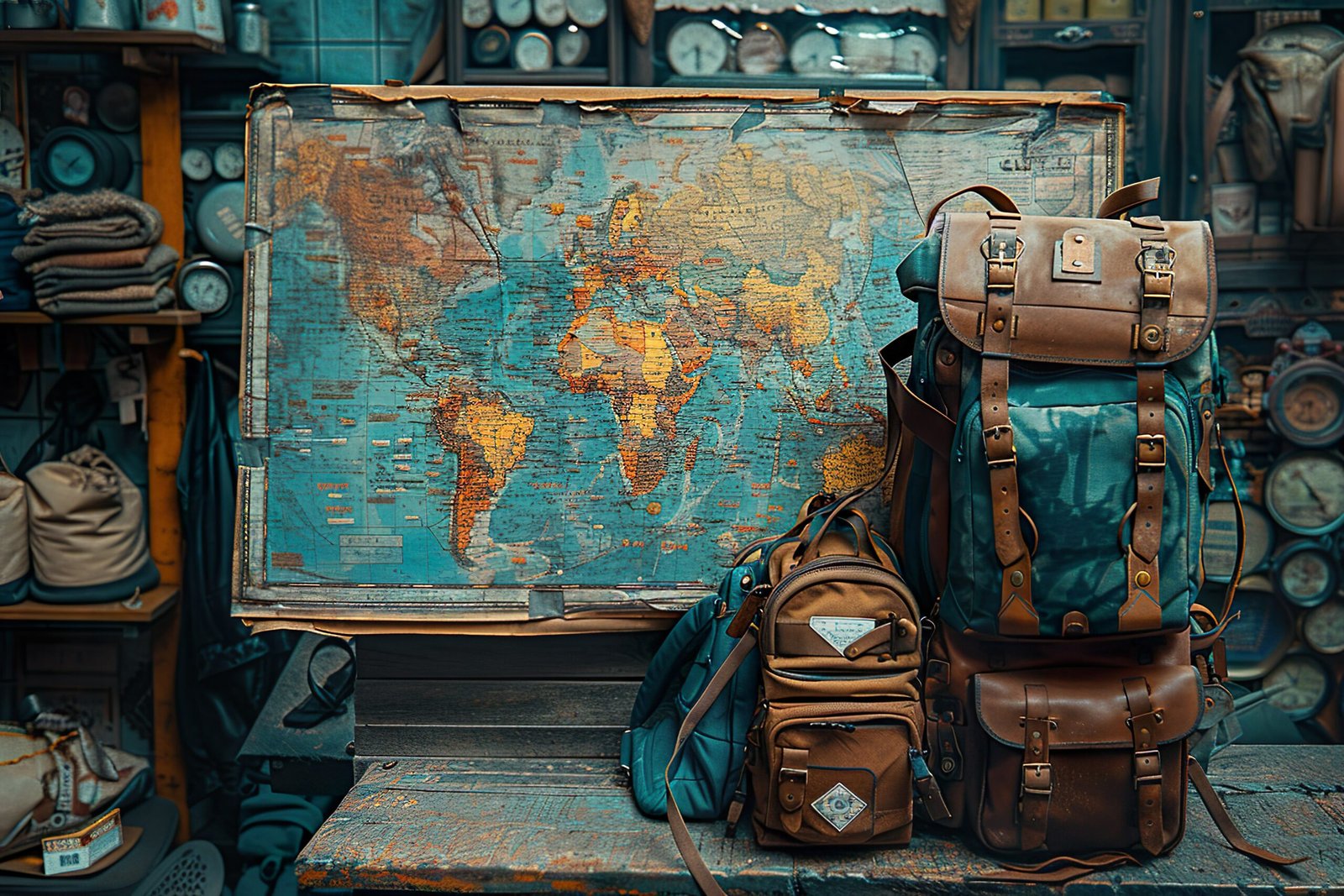
There is a moment, just before a person leaves home for good, when everything familiar suddenly becomes precious.
The walls of the house seem warmer. Familiar streets look different. A voice heard a thousand times suddenly sounds worth remembering. Even the smallest things-the morning light, the smell of food from the kitchen, the faces of neighbors passing by-begin to feel like pieces of a life that is about to become a memory.
Migration begins long before the plane takes off. It begins with a question: What if life could be different somewhere else?
For some people, that question is born from ambition. For others, necessity. For still others, curiosity-the quiet belief that somewhere beyond the borders of the familiar world, there might be another life waiting to be discovered.
Moving to a new country can be one of the most exciting and difficult journeys a person ever undertakes. It carries the promise of opportunity, but it also demands courage. A person leaves behind the certainty of what they know and steps into a world whose rules, rhythms, people, and possibilities are not yet familiar.
Before departure, the future often looks beautiful.
There are brochures to read, websites to explore, careers to imagine, cities to discover, and photographs of places that seem almost too perfect to be real. One begins to study everything: the climate, the culture, the employment opportunities, the healthcare system, the quality of life.
Skills are examined. Qualifications are gathered. Certificates are placed carefully into folders. Documents are checked again and again.
The future is planned as carefully as possible. But there is a difference between knowing about a country and living in one.A brochure can tell you about a city.
It cannot tell you how lonely a familiar meal can make you feel when eaten thousands of kilometres from home.
A website can explain the weather.It cannot tell you what the first cold wind against your face will actually feel like.
An article can describe a community.It cannot tell you what it means when a stranger welcomes you into their home and suddenly makes an unfamiliar country feel a little less foreign.
You can research a new life.But eventually, you have to live it.
And that is when the real journey begins.
Arriving and Facing Reality
After the long preparation, there comes a day when the paperwork is no longer paperwork.
It becomes reality.The family arrives.
The airport is behind them. The familiar country is now far away. Ahead lies a place they have read about, imagined, and prepared for-but never truly known.
There are forms to complete. Social Security matters to attend to. Healthcare procedures. Administrative requirements. Countless small responsibilities that seem ordinary to someone who has lived there for years but can feel enormous to someone seeing them for the first time.
And even after the formalities are finished, the feeling of being overwhelmed may remain.
Because now there is no brochure.
No imagined future.
Only real life.
One of the first questions confronting a newcomer is often painfully simple:Where will I work?
Education and previous experience may have opened doors in the old country, but a new country has its own expectations. Skills may need to be sharpened. Qualifications may need to be understood differently. The demands of the workforce may be unfamiliar.
A person searches.One opportunity looks promising.Another seems almost right.
Then another.
But many positions appear out of reach, unrelated to previous experience, or simply unavailable.
The excitement that once surrounded the job search can slowly become anxiety.
Was the decision correct?Will everything work out?How long will this take?
These questions can quietly follow a person through the day.
Yet migration teaches an important lesson: Difficulty is not the same as failure.
The first job may not be the right job. The first attempt may not succeed. The first few weeks may feel nothing like the life that was imagined before departure.
But persistence changes things.
Slowly, unfamiliar systems become understandable. Skills become stronger. Confidence grows. Doors that once seemed invisible begin to appear.
And eventually, if a person keeps moving forward, the foreign country begins to feel less foreign.
This is the strange transformation at the heart of migration.
At first, you are simply trying to survive the unfamiliar.
Then one day, without noticing exactly when it happened, you realise that you are beginning to belong.
My Journey Begins
Now I would like to take you into my own story.
My permanent move to Australia took place in 1991.
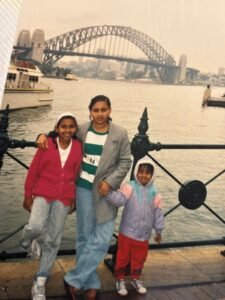
Four members of our family- My husband Abdul Quader, my two daughters, and I landed at Sydney Airport.
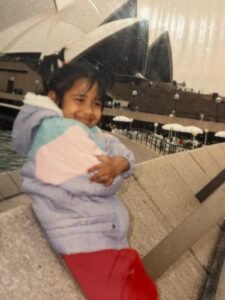
My elder daughter, Sabrina Quader, was seven years old.My younger daughter, Shahrina Quader, was not yet two.
We had crossed thousands of kilometres to begin a new chapter of our lives.But, strangely enough, Australia was not entirely new to us.
Our relationship with that country had begun several years earlier.And to understand why Australia eventually became our permanent home, we have to go back to the beginning.
Before the Permanent Move
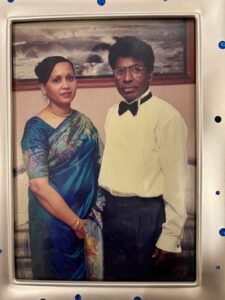
In January 1985, my husband, Abdul Quader, began his journey to Australia as a Commonwealth Government student.
His destination was Armidale-a small, picturesque town in the countryside of New South Wales.
For someone coming from Bangladesh, Armidale felt like another world.
It belonged to Australia’s New England region, a place of beautiful landscapes and a very different rhythm of life.
Soon after my husband arrived, my elder daughter and I travelled to join him.
And just like that, our family began learning what it meant to live somewhere far away from everything familiar.
We were no longer looking at Australia from a distance.We were inside it.We were walking its streets.
Meeting its people.Feeling its weather.Learning its rhythms.And slowly, becoming part of its everyday life.
We stayed in Armidale until 1987.Then we returned to Bangladesh.
At the time, we did not know that our connection with Australia was not finished.
Perhaps some places enter our lives twice.
The first time, we visit them.The second time, they become home.
The Cold Air and Warm Hearts of Armidale
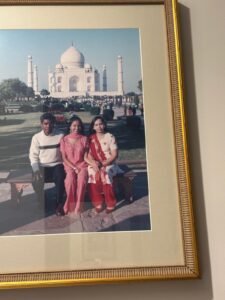
One of my earliest memories of Armidale is the weather.It was cold.Very cold compared with what we were accustomed to in Bangladesh.
The air had a sharpness to it. The chill seemed to announce itself the moment we stepped outside. It was a small but unmistakable reminder that we were living somewhere completely different.
But there was something else we discovered.
The people were warm.
The residents of Armidale were kind and welcoming, and their friendliness softened the unfamiliarity of the place.
That mattered more than I could have explained at the time.When you are far from home, kindness carries a different weight.
A friendly conversation can become a comfort.An invitation can become a bridge.
A welcoming face can make a strange street feel less strange.The weather was cold, but the people made the place feel warm.
And slowly, Armidale began to occupy a special place in our hearts.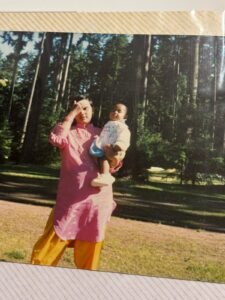
A University Town
The university was at the centre of much of Armidale’s community life.
Teachers and students gave the city its distinctive character. International students came from different countries, bringing with them different languages, traditions, memories, and ways of seeing the world.
Many of us were living through similar experiences.We had left our own countries.
We were raising families far from our relatives.
We were trying to understand a new culture while carrying our old cultures with us.
For the wives of international students, special gatherings were organised by generous local women.
Those gatherings became more than simple social occasions.
They became small islands of belonging.
When you are separated from family and friends, loneliness does not always announce itself loudly.
Sometimes it appears quietly.A familiar recipe suddenly feels important.
A conversation in your own cultural context becomes comforting.
A chance to sit among people who understand what it means to be far from home can change an entire week.
Those gatherings gave us that sense of connection.And some of my happiest memories of Armidale were born there.
When Food Became a Language
Every week, people from different cultural backgrounds gathered together.And everyone brought something.
A dish from home.A recipe passed down through generations.
Something familiar.Something that carried a piece of another country into an Australian room.
Soon the table would fill with different colours, aromas, textures, and flavours.
For me, those gatherings became a kind of culinary journey.
I discovered foods I had never tasted before.I learned recipes.I met people whose childhoods had been shaped by places I had never visited.And slowly I understood something that I still remember today:
Food can speak when words cannot.A dish can tell you where someone comes from.
It can tell you what their family celebrated.It can carry memories of childhood.It can turn strangers into friends.
We did not simply eat together.We shared pieces of ourselves.And perhaps that was why those weekly gatherings became so memorable.
We were all foreigners in one way or another, yet around that table, nobody seemed quite so foreign.
Between Two Homes
Life in Armidale was very different from life in Bangladesh.The environment was different.The culture was different.The weather was different.The daily rhythm was different.
Yet those differences did not make the experience less meaningful.They made it unforgettable.
When we returned to Bangladesh in 1987, we carried more than luggage with us.We carried memories.
The people.The gatherings.The cold mornings.The university community.The food.
The friendships.
The little moments that had slowly become part of our lives.For the next two years, we were back in Bangladesh.We had returned to our roots.
But life had already shown us another possibility.And sometimes, once you have seen another possibility, it becomes difficult to forget it.
Another Continent: Vancouver
Then, between 1989 and 1991, our family began another international chapter.
This time, our destination was Vancouver, British Columbia, Canada.Vancouver was beautiful in a completely different way.
The city seemed to exist between two worlds-urban life on one side and extraordinary natural landscapes on the other.
At first, we thought Vancouver might become our home.
My husband was pursuing a PhD in Economics at Simon Fraser University.His academic life demanded intense concentration.Research.Theory.Long hours.Books and papers.
The quiet pressure of pursuing a doctoral degree.For him, Vancouver was a place of academic ambition.For our family, it was another attempt to build a life far from home.
But there was something none of us could plan for.Homesickness.
When Home Becomes a Feeling
As the months passed, my husband began to miss Bangladesh.He missed his family.He missed the familiarity of home.He missed the people and places that had been part of his life for years.
Vancouver was beautiful.The opportunities were real.The university was prestigious.
Yet none of those things could completely replace home.That is one of the strange truths about migration.
A person can be grateful for where they are and still miss where they came from.They can admire a new country and long for an old one.They can be surrounded by beauty and still feel lonely.
My husband remained committed to his studies. He was determined to continue for at least another year.But emotionally, the distance was becoming difficult.
Eventually, as a family, we decided that we needed a pause.We would return to Bangladesh.
Perhaps a little time at home would restore our spirits.Perhaps being surrounded by family and old friends would give us the strength to return to Vancouver and continue the journey.
So we packed our bags once again.And in 1991, we went back to Bangladesh.
We thought we were going home temporarily.We did not know that Bangladesh was about to change the direction of our lives.
The Decision We Never Expected to Make
When we returned to Bangladesh, something unexpected happened.We began reconnecting with our old friends.And one by one, we discovered that many of them had made a remarkable decision.
They had left Bangladesh.They had moved to Australia.And many had settled in Armidale.Armidale.
The same place where we had once lived.The same small Australian town whose people had welcomed us.
The same community where we had shared food, stories, friendship, and laughter.
Suddenly, the past seemed to be calling us back.We had been preparing to return to Vancouver.But now another possibility stood before us.Australia.We already knew it.
We already knew the people.We already understood something of the culture.And, perhaps most importantly, we already had memories there.
Sometimes the biggest decisions in life do not arrive with dramatic announcements.Sometimes they begin quietly.With a conversation.With a memory.With a name.
For us, that name was Armidale.And gradually, our plan changed.
We decided not to return to Canada.We would go to Australia.We would begin again.
Vancouver: The Place We Left Behind
Although Australia ultimately became our permanent destination, Vancouver remained an important part of our story.
Canada had given us experiences that we would never forget.
It had given us beauty, academic life, challenges, homesickness-and my first experience of snow.
Vancouver itself was extraordinary.
The city sits between the Pacific Ocean and mountains, creating a landscape where urban life and nature seem to exist side by side.
British Columbia is also home to two major universities:The University of British Columbia (UBC) and Simon Fraser University (SFU).
UBC’s location near the shoreline gives it spectacular views and a distinctive coastal atmosphere.Simon Fraser University, where my husband studied, sits high in the mountains.
Its elevated location provides a beautiful setting, but in winter, that beauty could become a serious practical challenge.
I was about to discover exactly how serious.
The Day the Snow Came
It was December 1990.We were living in the university dormitory.Late one afternoon, the light began to change.The day was fading.
Then an announcement came through the centrally mounted sound system in the corridor.
The university was being cancelled.A storm was approaching.Heavy snowfall was expected.The announcement was urgent.
Simon Fraser University was located on top of a mountain, and heavy snow could transform the roads into barriers.
If the roads became impassable, the university could become isolated.Students living in town were advised to leave immediately.
The atmosphere changed.People began gathering their belongings.Doors opened.Footsteps moved quickly through the corridors.
Everyone understood that this was not an ordinary university closure.The weather was taking control.And I was watching something I had never experienced before.Snow.
My First Snowfall
For the first time in my life, I watched snow transform the world.It was unlike anything I had known.The landscape changed.The roads changed.The university changed.
What had been ordinary only hours earlier suddenly seemed fragile in the face of nature.
The mountain setting of the university made the situation even more serious.As the snowfall intensified, transportation could become difficult or impossible.Roads could close.People could become stranded.
The university could be cut off.For someone experiencing snow for the first time, the sight was fascinating.But behind that fascination was a practical reality.
This was not simply beautiful white scenery.This was weather powerful enough to change people’s plans, close a university, and isolate an entire community.
That day taught me something that no brochure could have taught me.Some things can only be understood by living them.You can read about winter.You can see photographs of snow.
You can listen to people describe a storm.But until you stand inside that experience, you do not truly know it.And that is perhaps why the simplest sentence can sometimes carry the greatest truth:
Life is full of experiences.Vancouver gave us one.But it was not going to be our final destination.
Choosing Australia
After our return to Bangladesh, the decision gradually became clear.Australia would be our new destination.We submitted our application to migrate.Then came the waiting.
For many families, migration paperwork can feel endless. Every document matters. Every requirement matters. Every unanswered question can create uncertainty.
For us, however, the process moved surprisingly quickly.Approximately six to eight weeks after submitting our application, we received our permanent residency visa.
The possibility had become real.Australia was no longer simply a memory from the past.It was our future.We had already experienced Armidale.We knew its people.We knew something of its culture.We had walked through its streets before.
We had sat with people from different countries around tables filled with food.We had already formed connections there.
Perhaps that is why the decision felt less like stepping into a completely unknown world and more like returning to a place that had somehow been waiting for us.
Sydney Airport
Eventually, after three and a half years, we arrived in Sydney.Four members of our family stepped into Australia:My husband Abdul Quader.My elder daughter, Sabrina Quader.My younger daughter, Shahrina Quader.And me.
We landed at Sydney Airport.This time, the feeling was different.In 1985, Australia had been a temporary chapter.In 1991, we were arriving with a different intention.This was to be permanent.
We had crossed continents before.We had returned home before.We had changed our plans before.We had experienced Australia.We had experienced Canada.We had experienced homesickness.We had experienced friendship.We had experienced uncertainty.
And now, after all those turns, we had arrived again.Only this time, we were ready to build our future there.
A New Land, A New Life
Looking back, I realise that migration is not a straight road.It is a series of unexpected turns.
You make a plan.Life changes it.You make another plan.Someone returns home.Someone leaves.
A friendship changes your thinking.A memory pulls you toward a place you thought you had left behind.
A beautiful city does not feel like home.A small town you once knew suddenly feels like the right place to begin again.
Before leaving home, we imagined Australia through information.After arriving, we learned Australia through experience.
There were forms to complete.Systems to understand.Careers to build.Skills to develop.
Communities to enter.Friendships to create.And countless small moments that no migration guide could have prepared us for.But perhaps that is the real meaning of arriving in a new land.
It is not simply about crossing a border.It is about crossing an invisible boundary inside yourself.
The person who leaves home is not exactly the same person who arrives.
Somewhere between the airport and the unfamiliar streets, between the first cold morning and the first warm welcome, between loneliness and friendship, between uncertainty and confidence